Maison Blanche
An old Chalk Quarry
Beneath the fields near Neuville-Saint-Vaast lies Maison Blanche, an old chalk quarry in the battlefield landscape west of Vimy Ridge. Before the Canadian assault of 9 April 1917, this ground had already witnessed fierce fighting during the French offensives of 1915. Later, the quarry offered Canadian soldiers shelter while they served in the Vimy sector; they left names, dates, drawings and carvings on its walls. Those marks bring the history of the battle into close focus, connecting it to the people who served there, including Indigenous Canadians, and the work they undertook. The quarry’s story also reaches beyond 1917, with later marks reflecting visits and another period of wartime shelter. The Durand Group’s recording work, undertaken in close collaboration with Canadigm, helps connect these layers of evidence to Maison Blanche’s changing place in the history of the battlefield
Before the battlefield: a chalk quarry
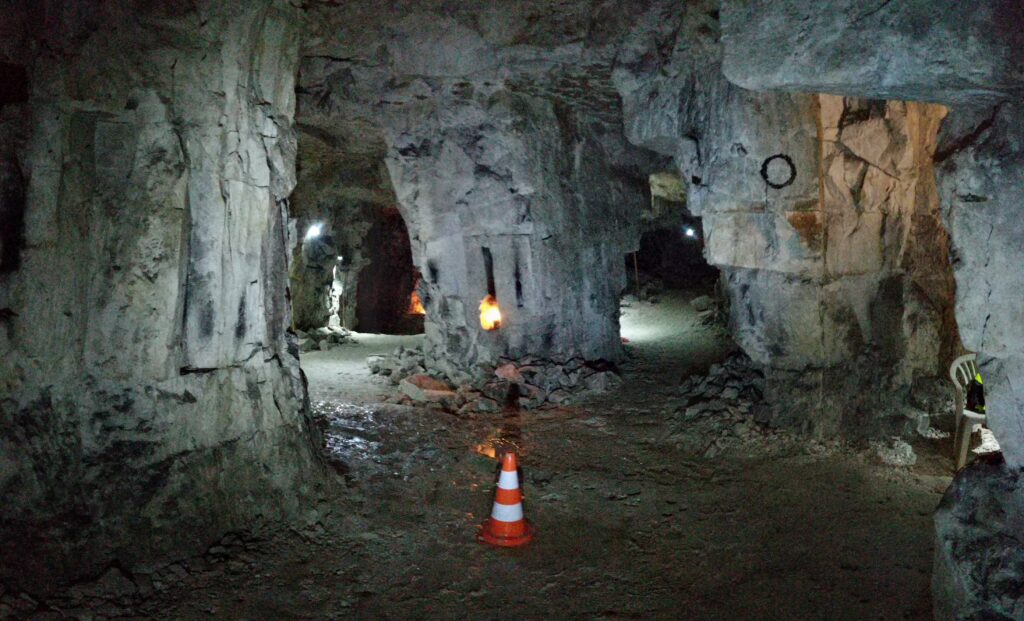
Long before the war, quarrying shaped the landscape of the Arras region. Chalk extracted underground supplied building stone for the area’s buildings and walls; the Boves beneath Arras are a documented example. Maison Blanche also began as a chalk quarry, dated in a study of the site to the second half of the eighteenth century. An inscription, a carving and a drawing on its walls suggest that it was probably in use around 1861, when it had an entrance stairway and a shaft for raising stone. The local geology made it possible to cut chambers and tunnels into the chalk, while earlier quarrying left ready-made underground spaces. Along this part of the Western Front, that combination made underground shelter particularly useful once artillery transformed the ground above.
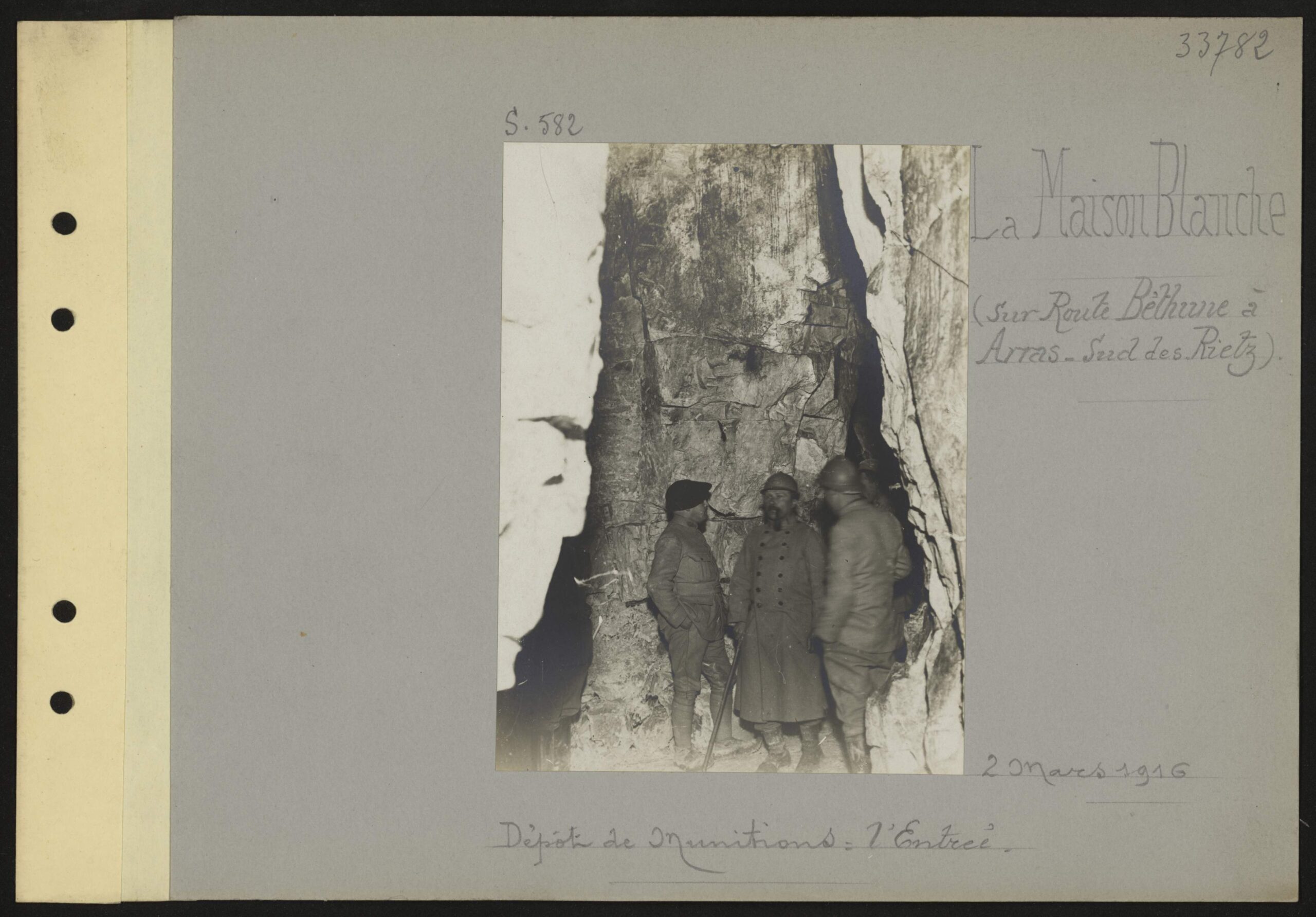
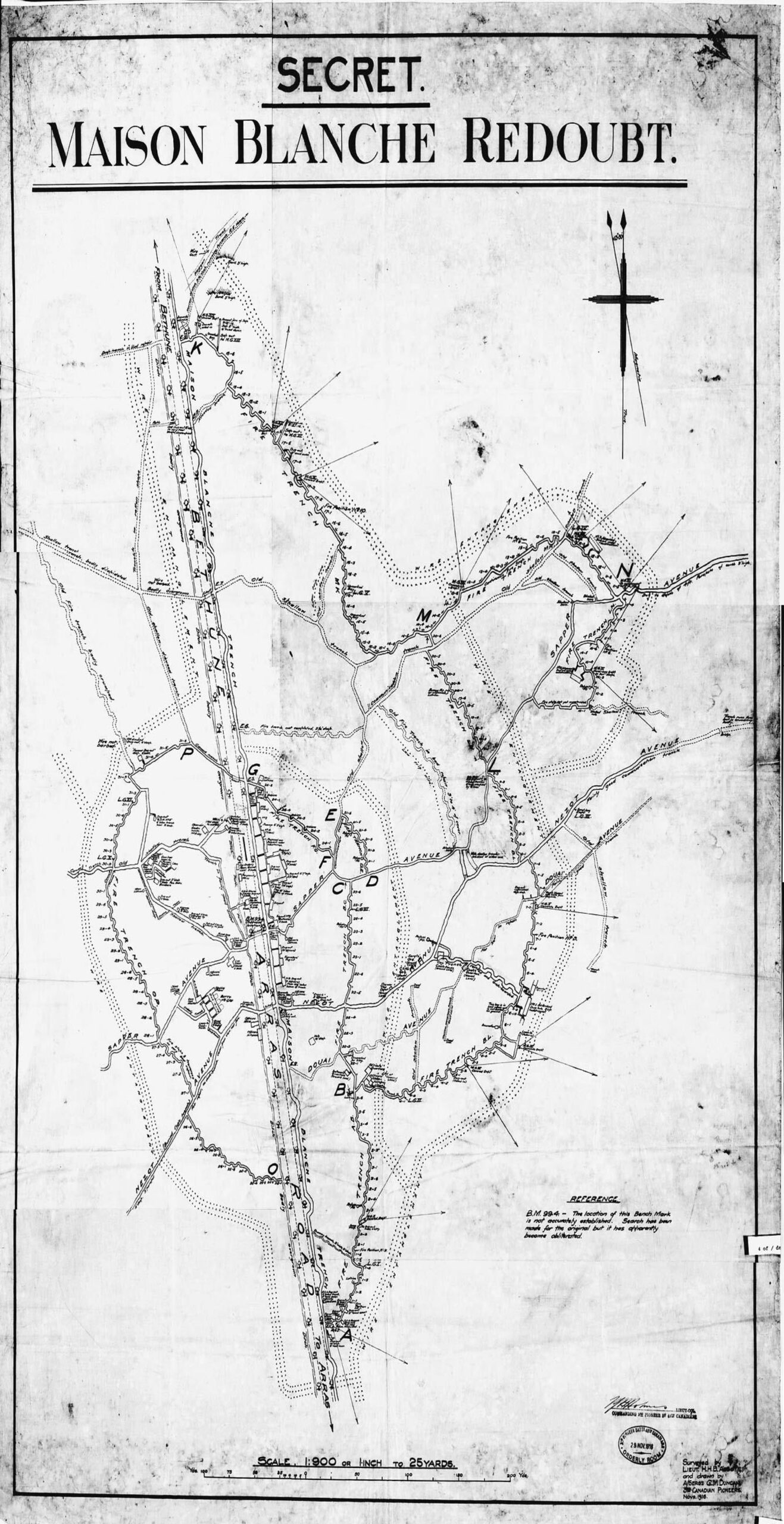
Maison Blanche during the First World War
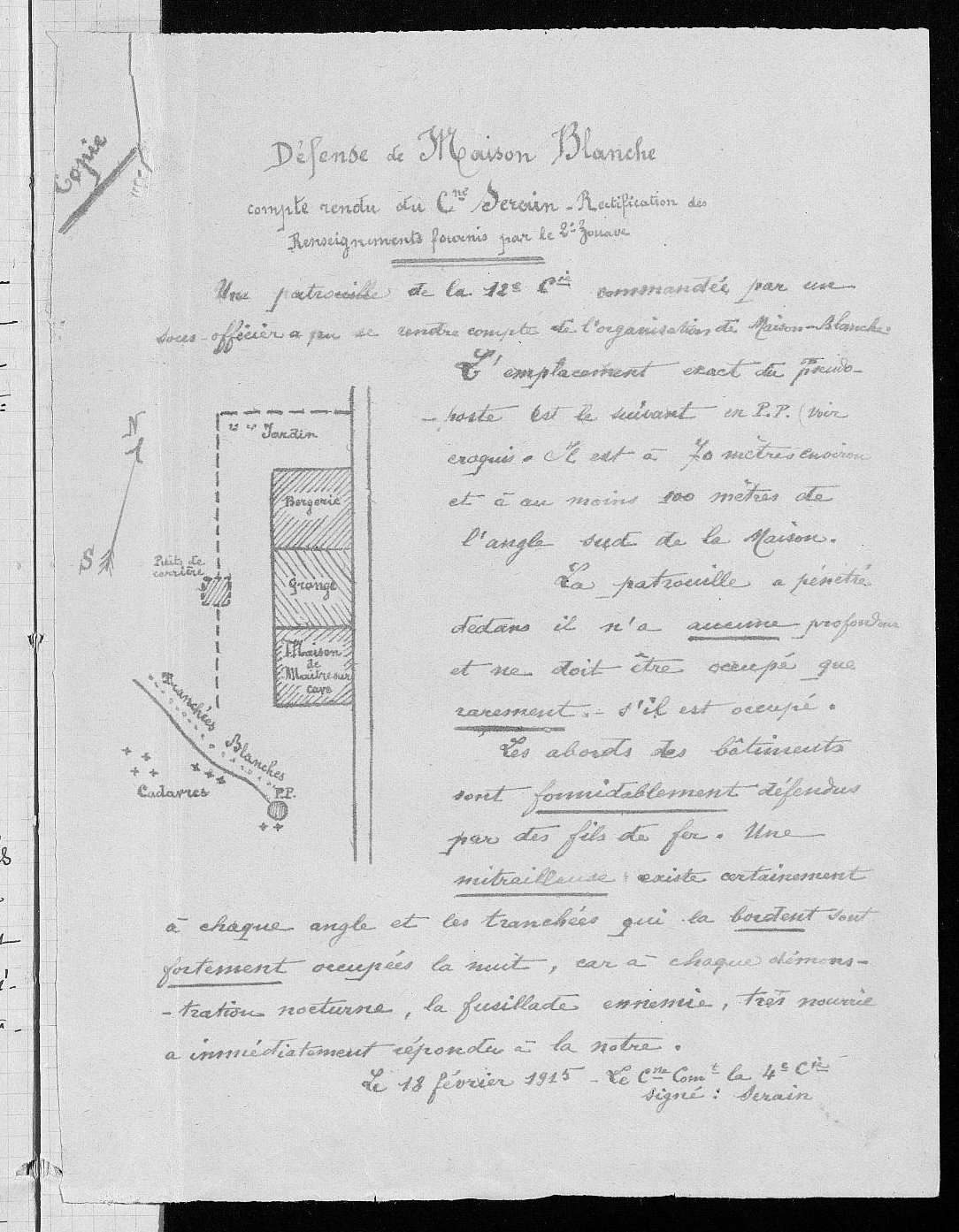
The ground around Maison Blanche became part of the contested landscape west of Vimy Ridge during the 1915 Artois battles. A French report dated 18 February 1915 describes German defences at the Maison Blanche position. Its sketch marks a “puits de carrière” (quarry shaft): French troops knew the position of the underground quarry even as fighting continued above it.
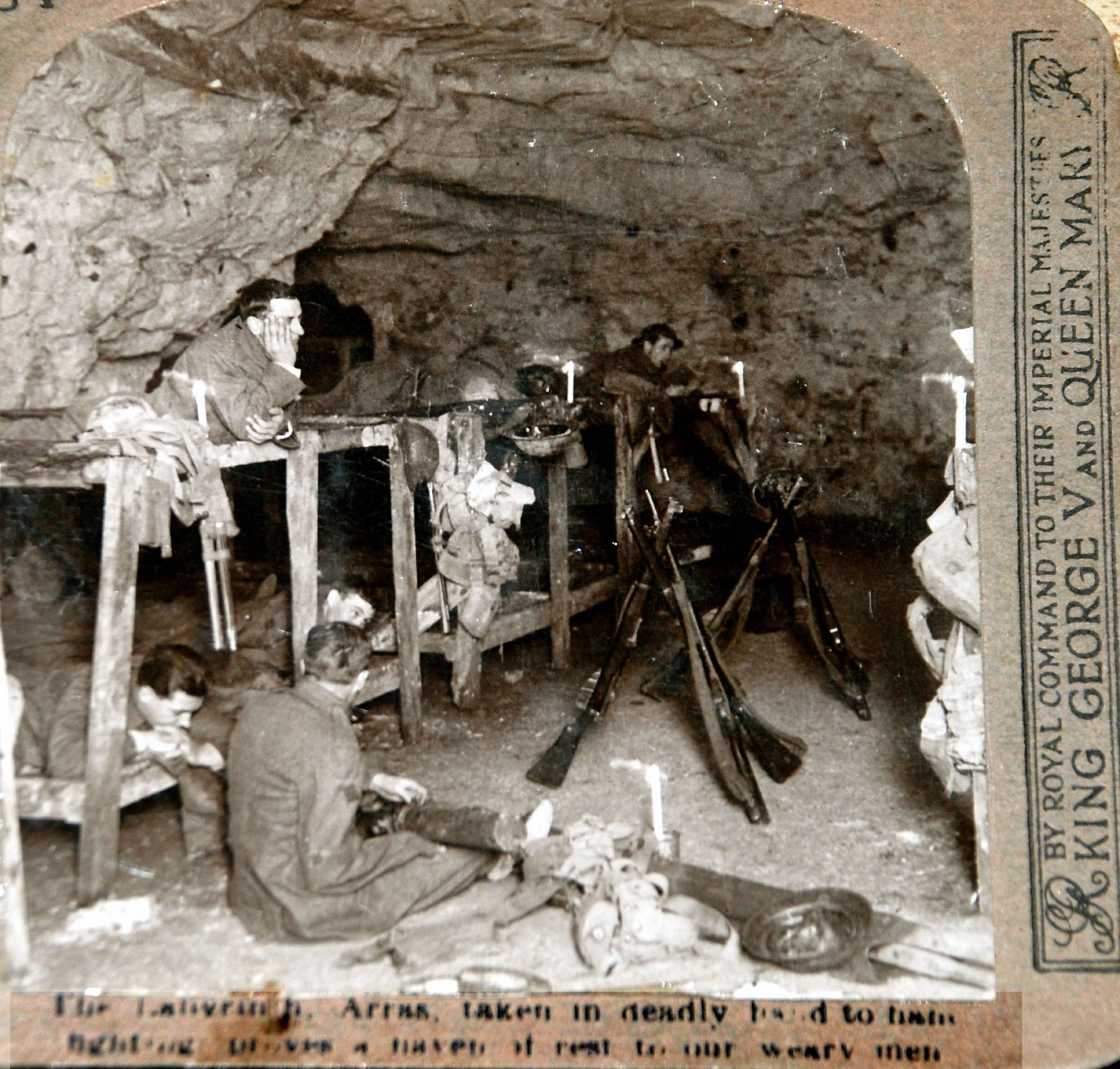
As the front remained in place, sustained shellfire threatened soldiers even away from the front trench. Armies on both sides sought protection underground, using chambers for rest, command posts and stores, and passages for movement or mining beneath enemy lines. Existing caves and quarries could be adapted, while tunnelling companies dug new passages. British wartime accounts often called these spaces “caves”; German accounts used “catacombs.” Around Arras and Vimy, the chalk and former quarries made this response to siege-like conditions especially practical. The Canadian Corps moved into the lines facing Vimy Ridge in late autumn 1916, preparing through the winter for the April attack. In January 1917, the British 185th Tunnelling Company surveyed Maison Blanche. Its report described a damp quarry with one usable incline entrance, a chamber floor roughly 12 to 14 metres below the surface, and sound roof in only part of the interior. The company judged that some chambers would need timber support before troops could occupy them during heavy bombardment. The quarry was subsequently used to accommodate troops of the 1st Canadian Division behind the reserve line.Maison Blanche was one of five souterraines used to shelter Canadian troops in the Vimy sector. Its approximately 800 square metres of chambers provided substantial protected accommodation behind the reserve line. It was an adapted quarry rather than a subway carrying troops towards the front: its value lay in allowing soldiers to rest, sleep and assemble beneath ground that remained exposed to artillery fire.
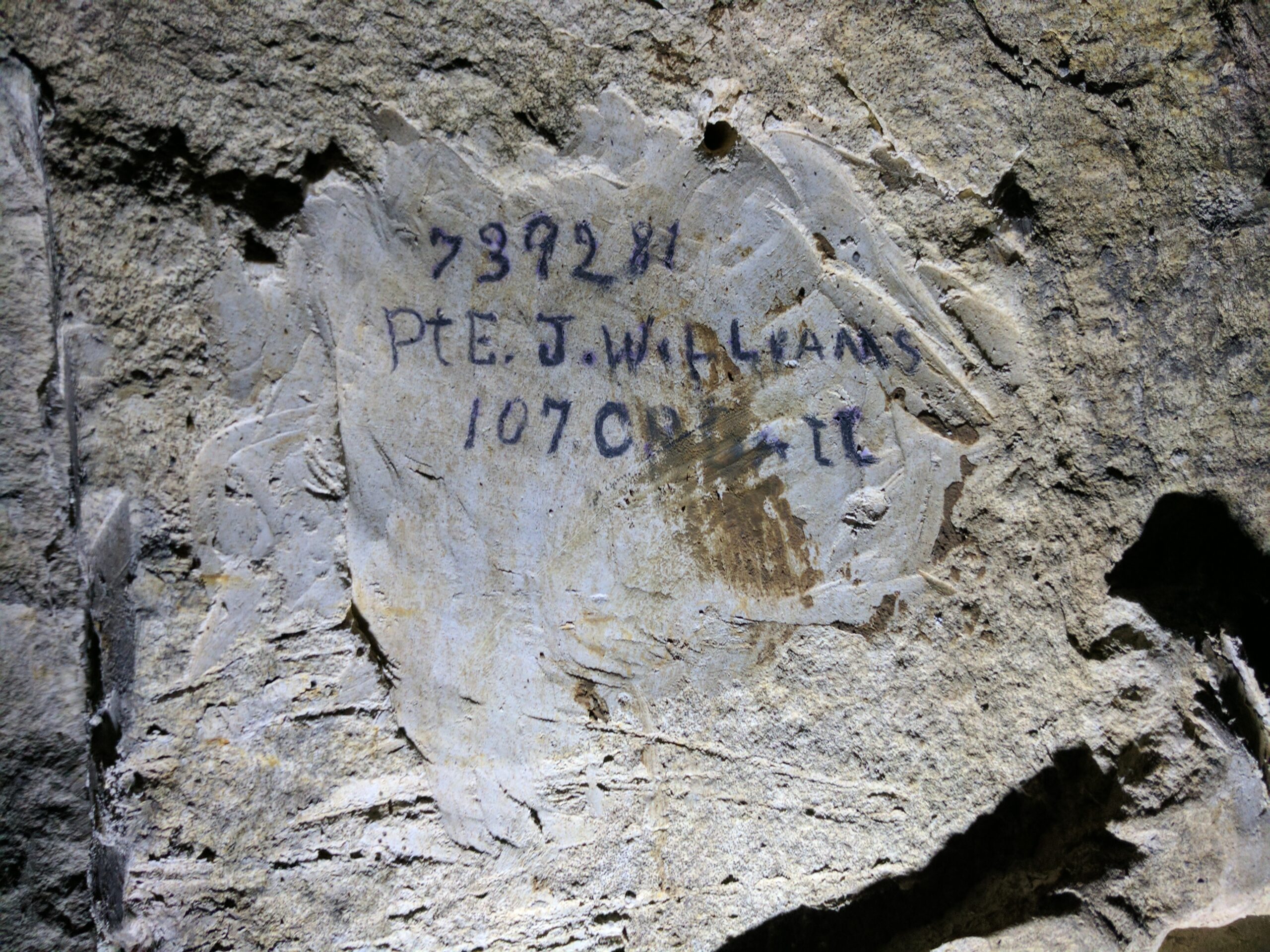
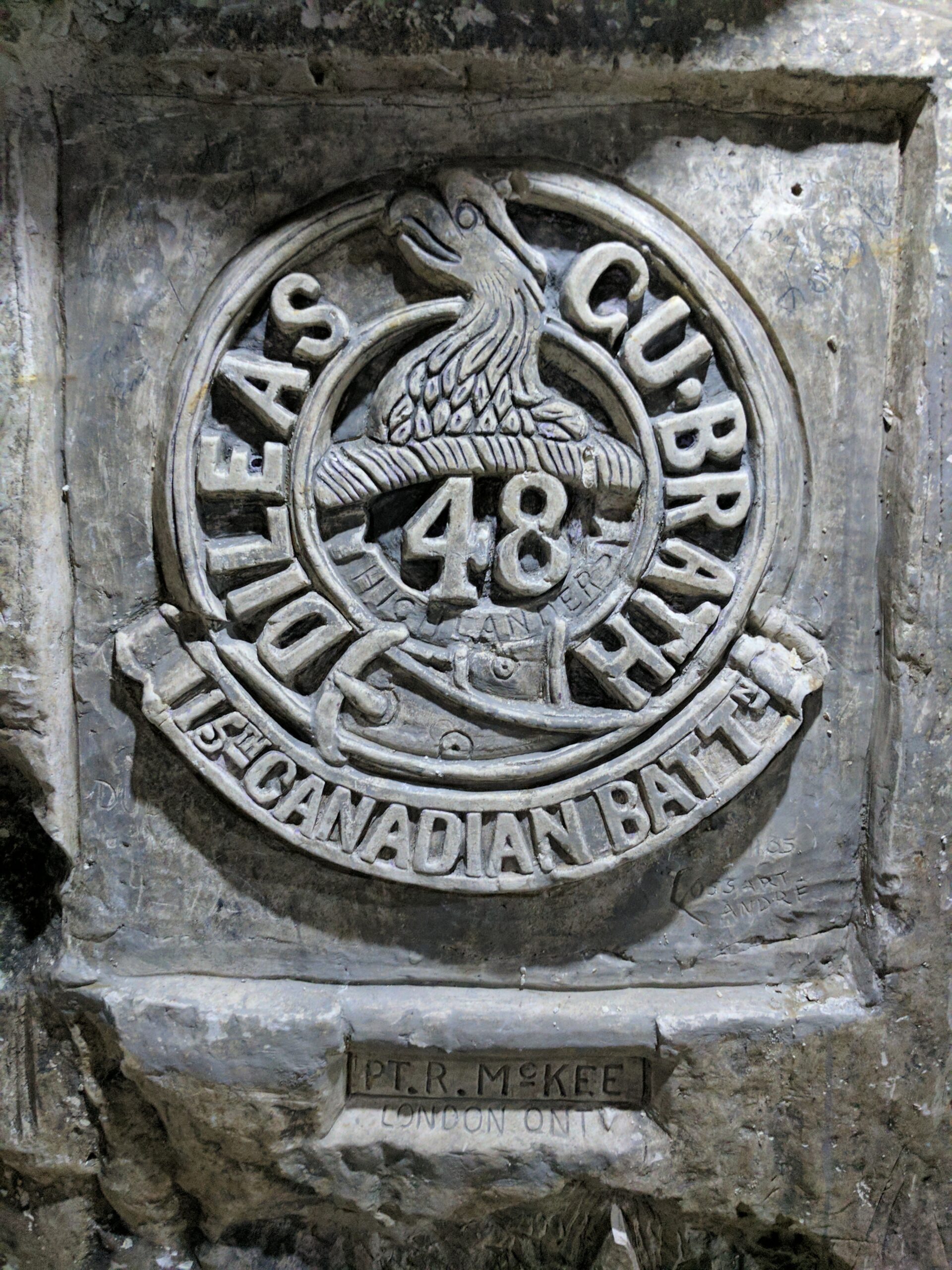
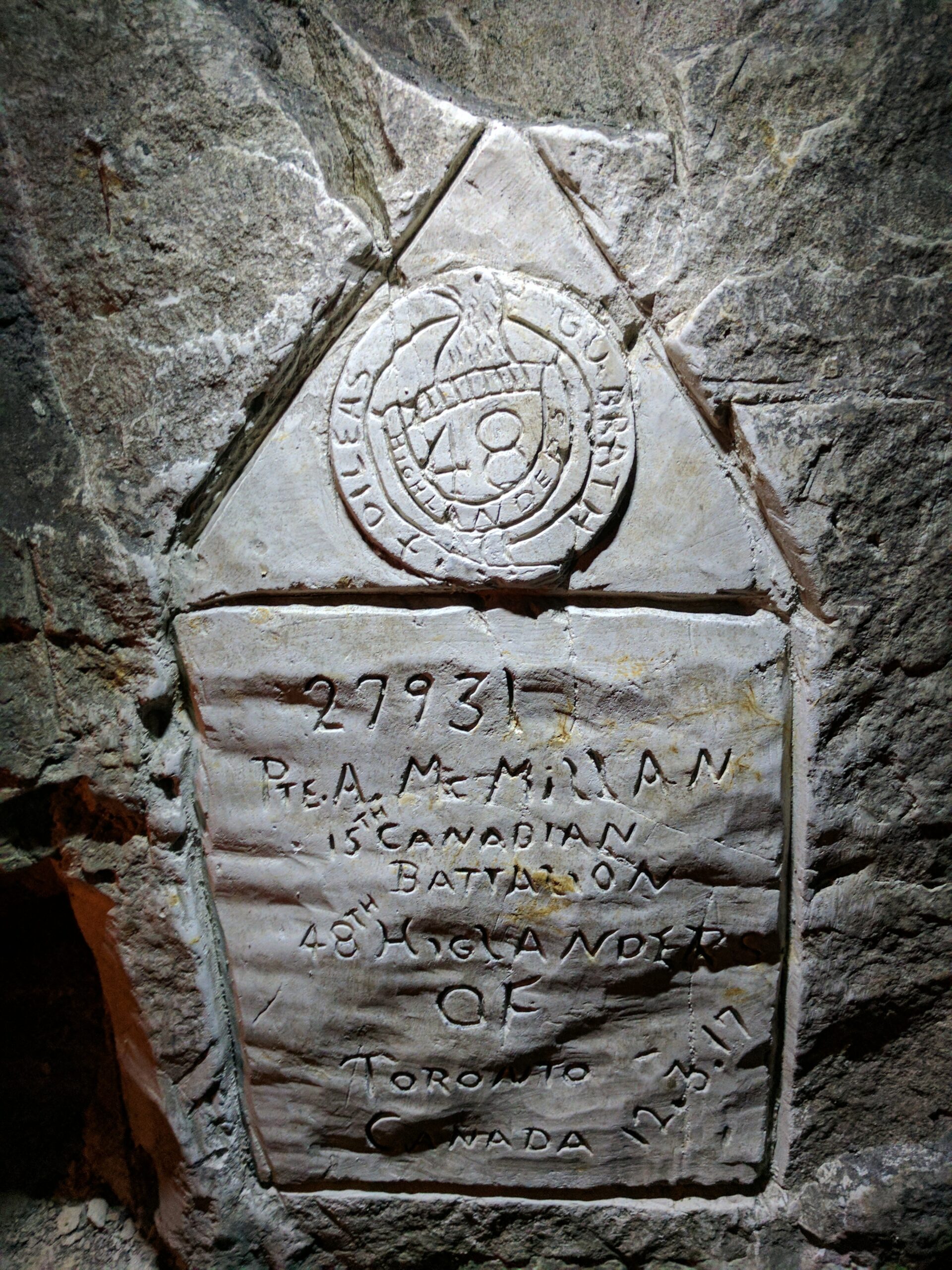
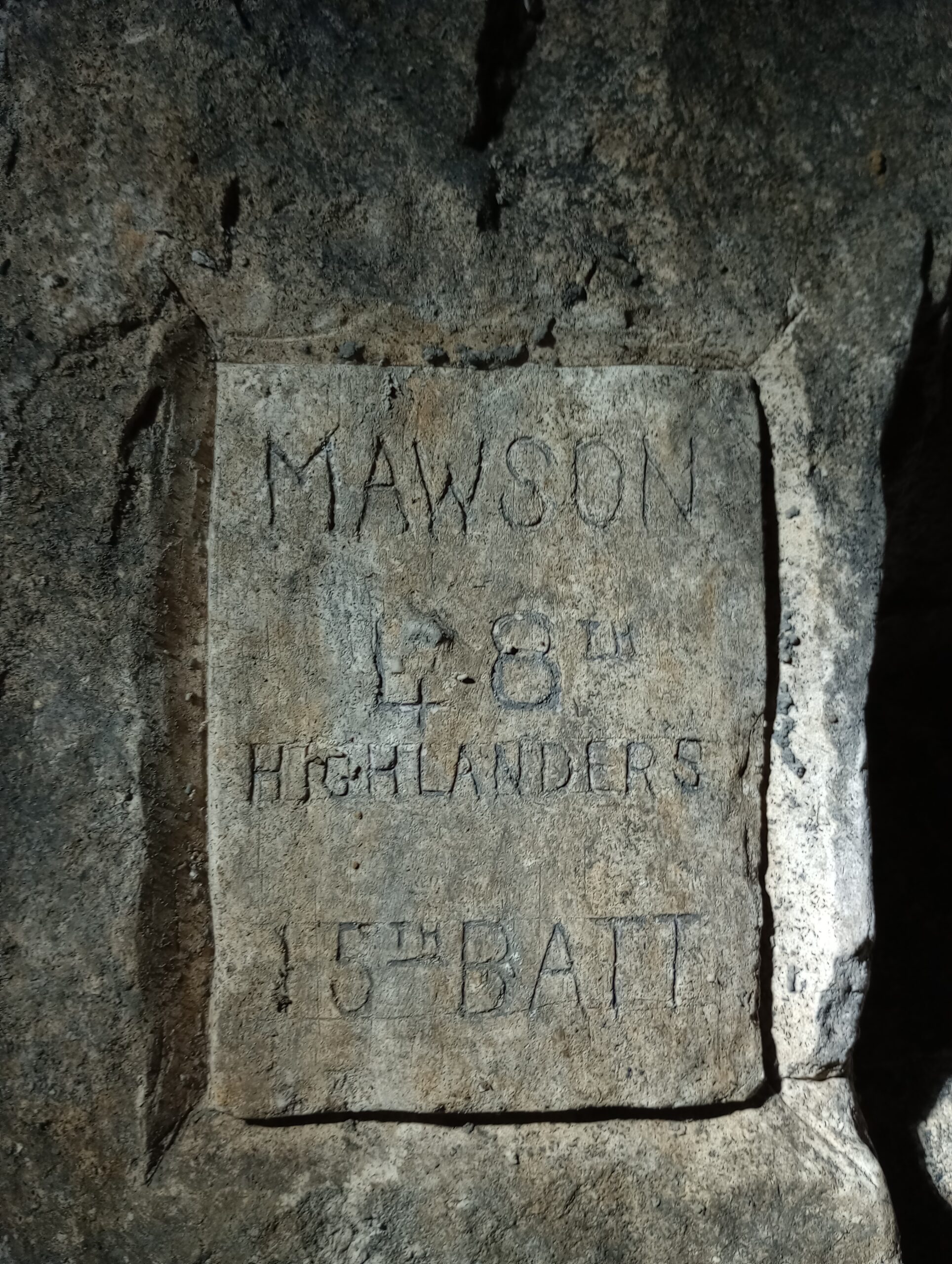
The 15th Canadian Infantry Battalion (48th Highlanders of Canada) was among the units that sheltered at Maison Blanche. Its battalion history places the Highlanders in the caves from 12 March 1917, when they relieved the 13th Battalion in support. It describes men sleeping underground by day while working parties laboured in the front line, support positions and tunnels at night. Inscriptions associated with the 15th Battalion, the 107th Canadian Pioneer Battalion and other Canadian personnel survive on the walls. They connect the place of shelter to the people whose work supported the assault on Vimy Ridge on 9 April 1917. Another view of life below ground comes from Canon Frederick George Scott, a Canadian chaplain who visited Maison Blanche while the 16th Canadian Infantry Battalion was billeted there. In his account, published in 1922, he places the large cavern beyond the Arras–Béthune road and describes white chalk chambers connected by passages, soldiers cooking or playing cards by candlelight, and a service he held for them inside. His firsthand description gives the quarry a human scale: for men held in reserve before the attack, it was a crowded place of rest and ordinary activity beneath the threatened surface.Visits and renewed shelter after 1918
After the war, the former front drew veterans, bereaved families and other visitors. They came to find graves, visit memorials and walk ground they had known through the war. Two interwar books describe visits to the Maison Blanche caves themselves. In The Wet Flanders Plain, Henry Williamson recounts a return to the area in 1927. He walked from the former Canadian headquarters through the farmyard to an entrance into the cool chalk chambers, he saw carved signatures, candle marks and pencilled initials.
Canadian veteran Will R. Bird gives another firsthand account in Thirteen Years After. Approaching the farm from the German cemetery across the road, he asked to see the caves. Given candles, he crossed the barn and garden and descended stone steps. Bird spent about an hour exploring the passages and high chambers and observing Canadian carvings and inscriptions. The woman at the farm told him that some carvings had already been taken by visitors. Together, these accounts show how the former military shelter became a place of return and remembrance, while visitor graffiti added another layer to its walls. A later study also documents interwar access to the quarry. In May 1940, the quarry’s role as shelter returned. As German forces advanced through Belgium and northern France, refugees briefly sought protection underground at Maison Blanche. Some marks have been attributed to Belgian refugees from that period. The souterraine thus carries traces of wartime service, peacetime visits and a second wartime flight through the region.What the walls reveal
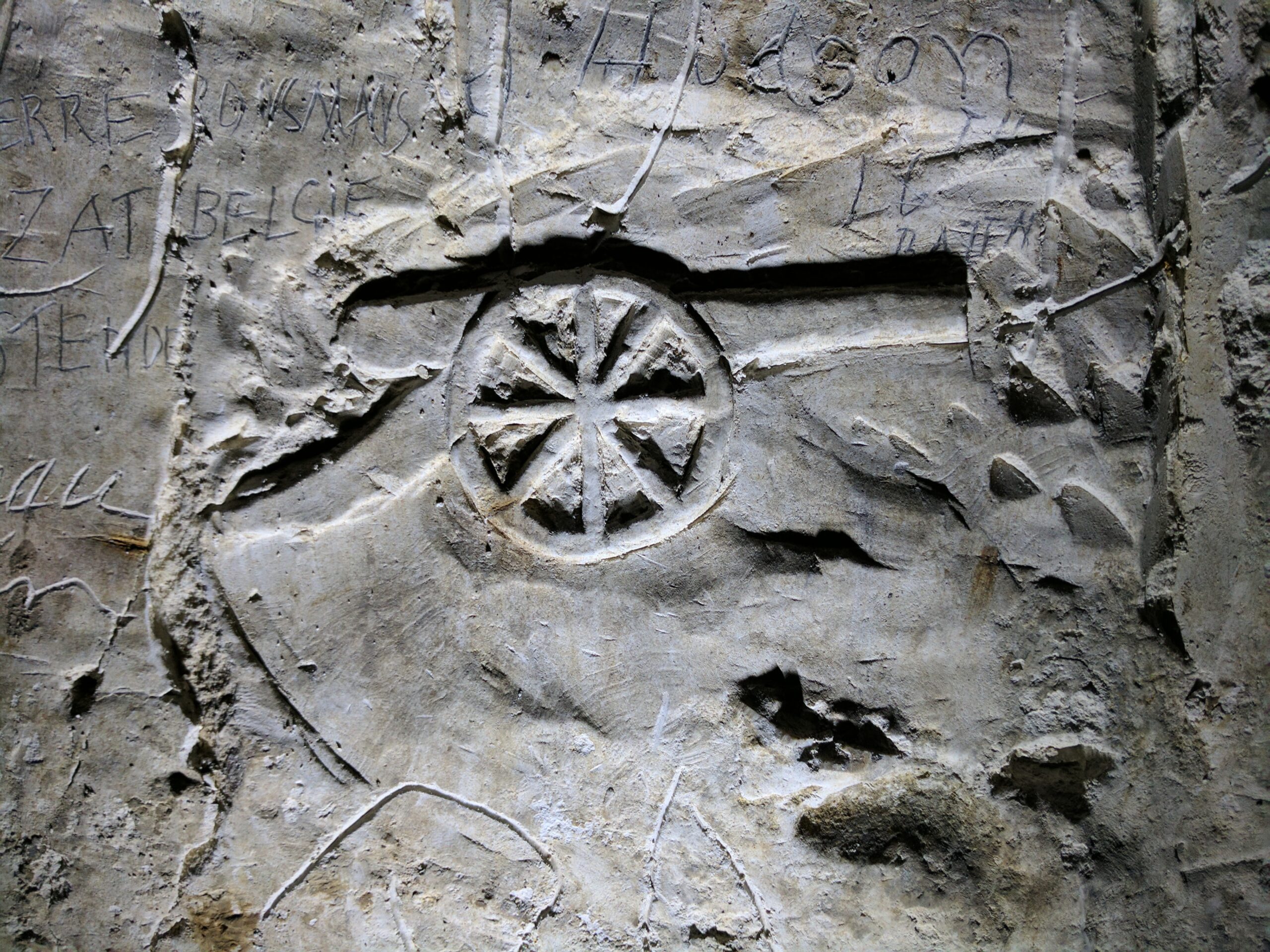
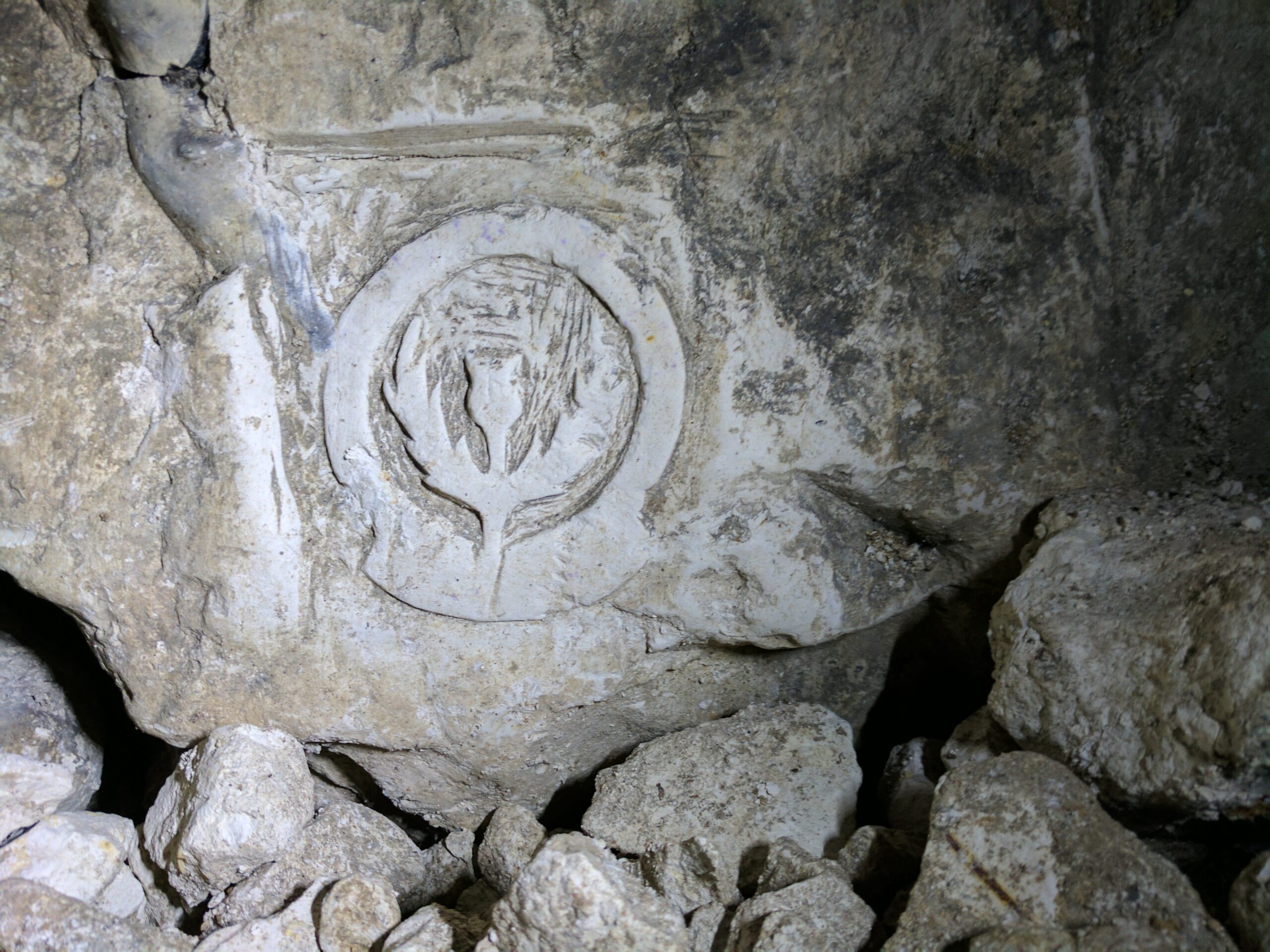
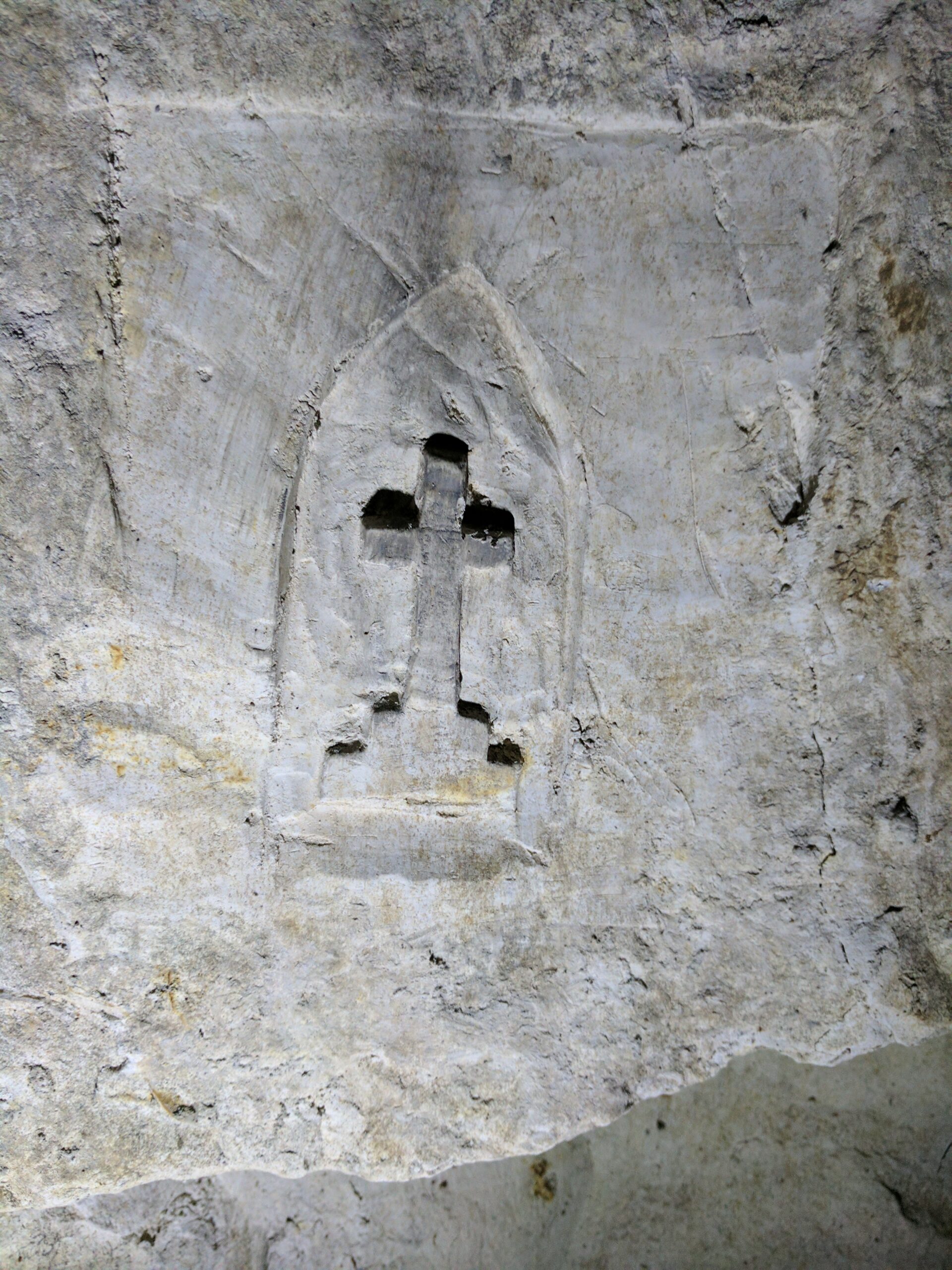
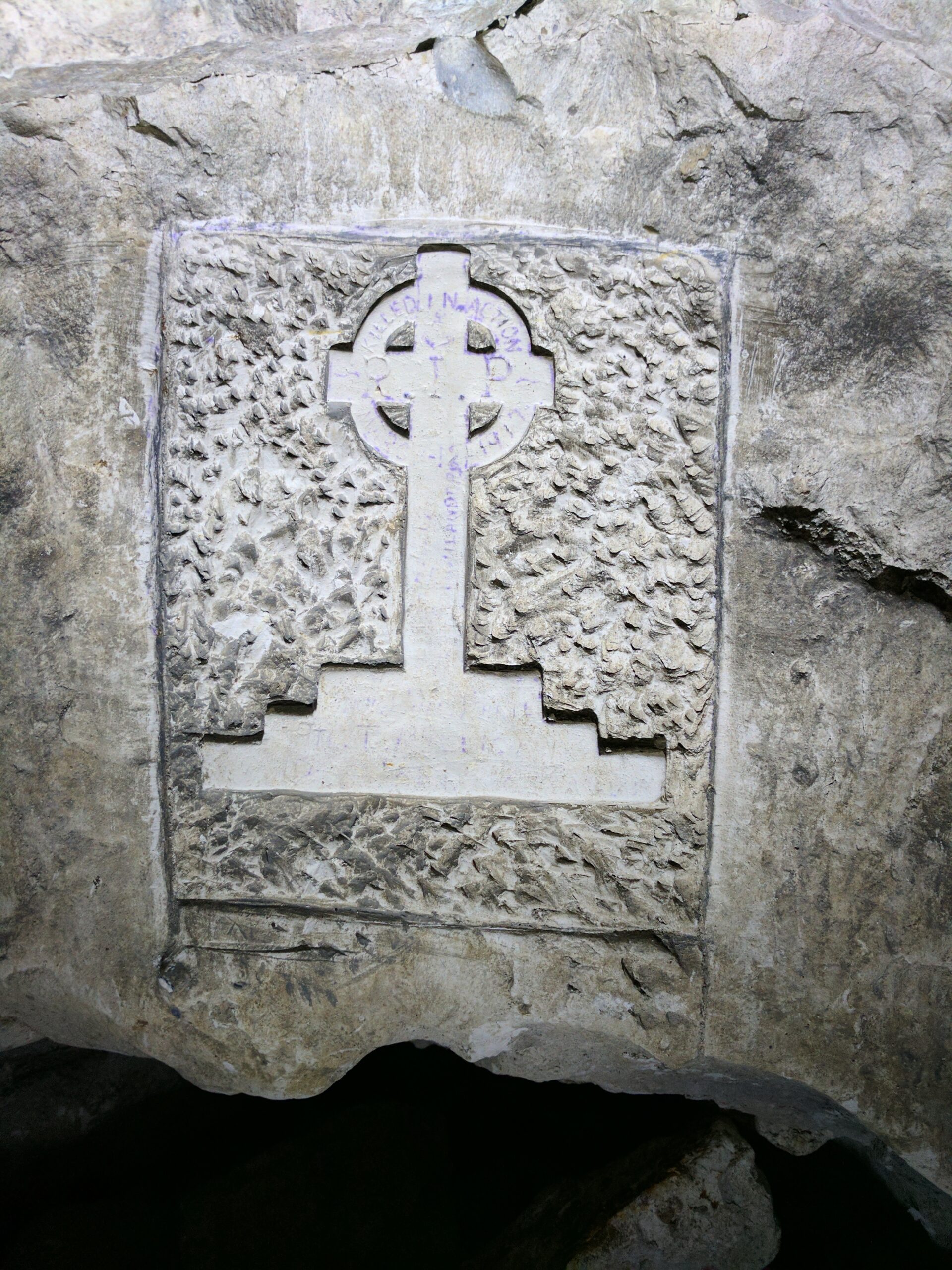
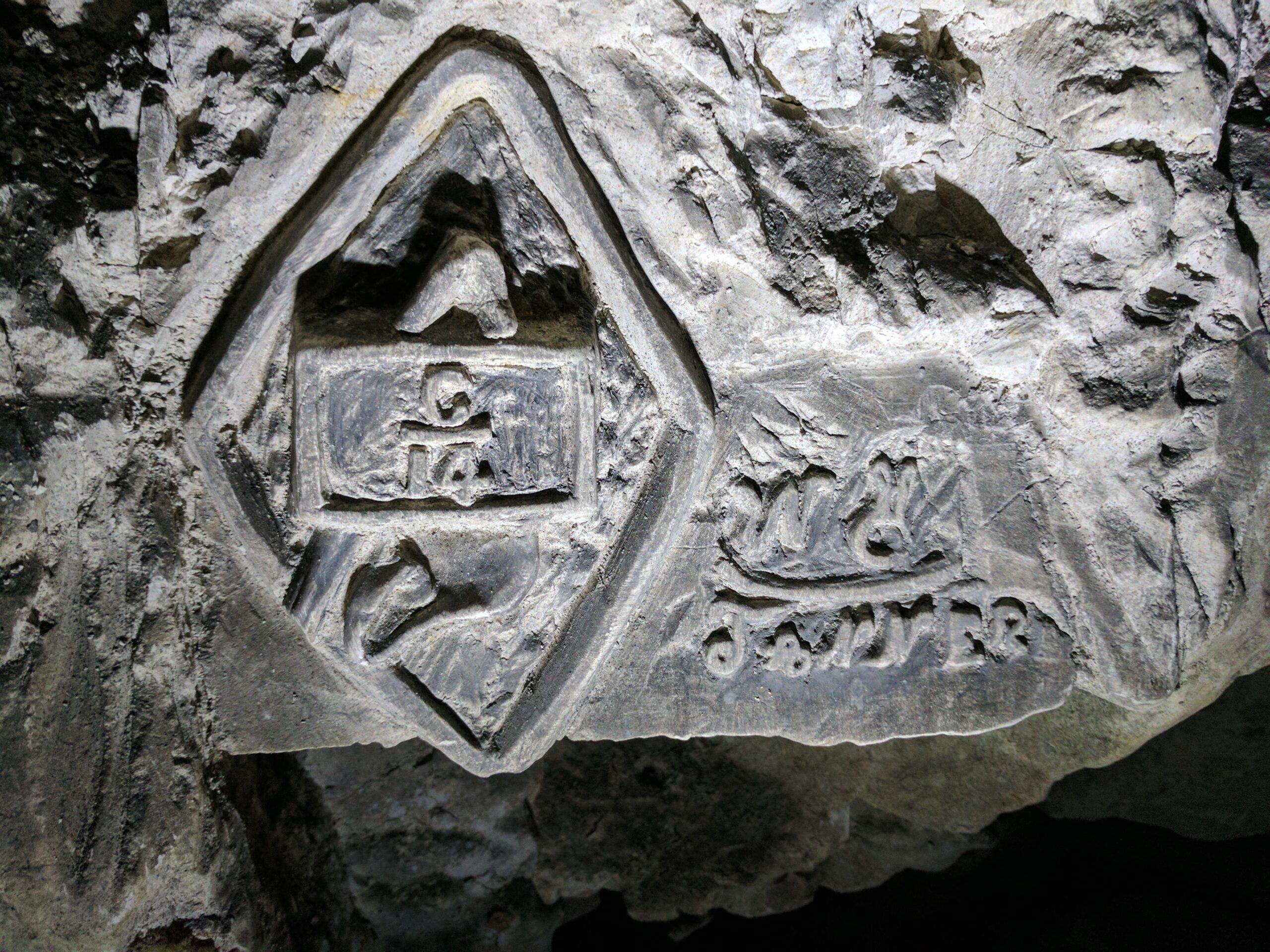
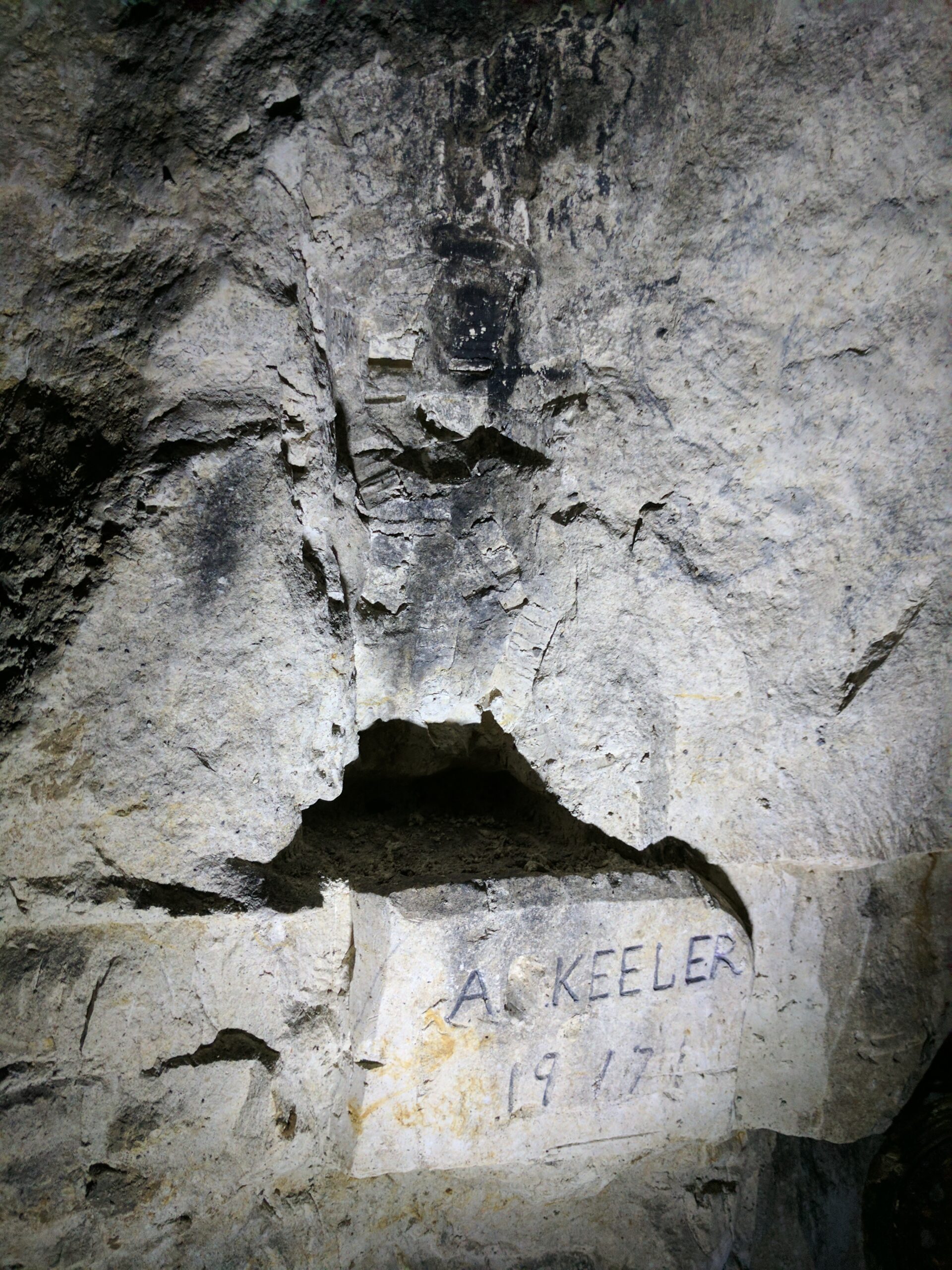
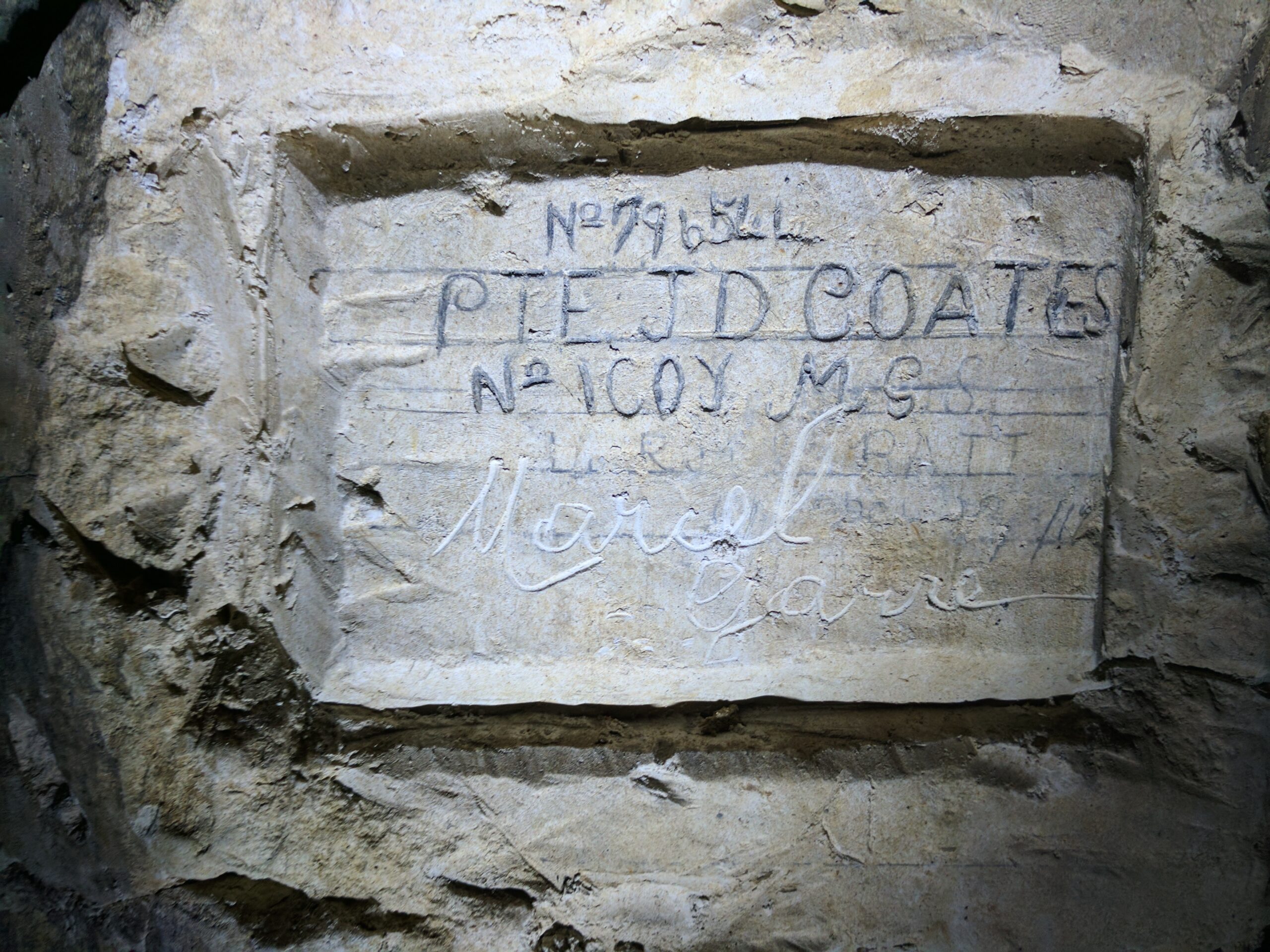
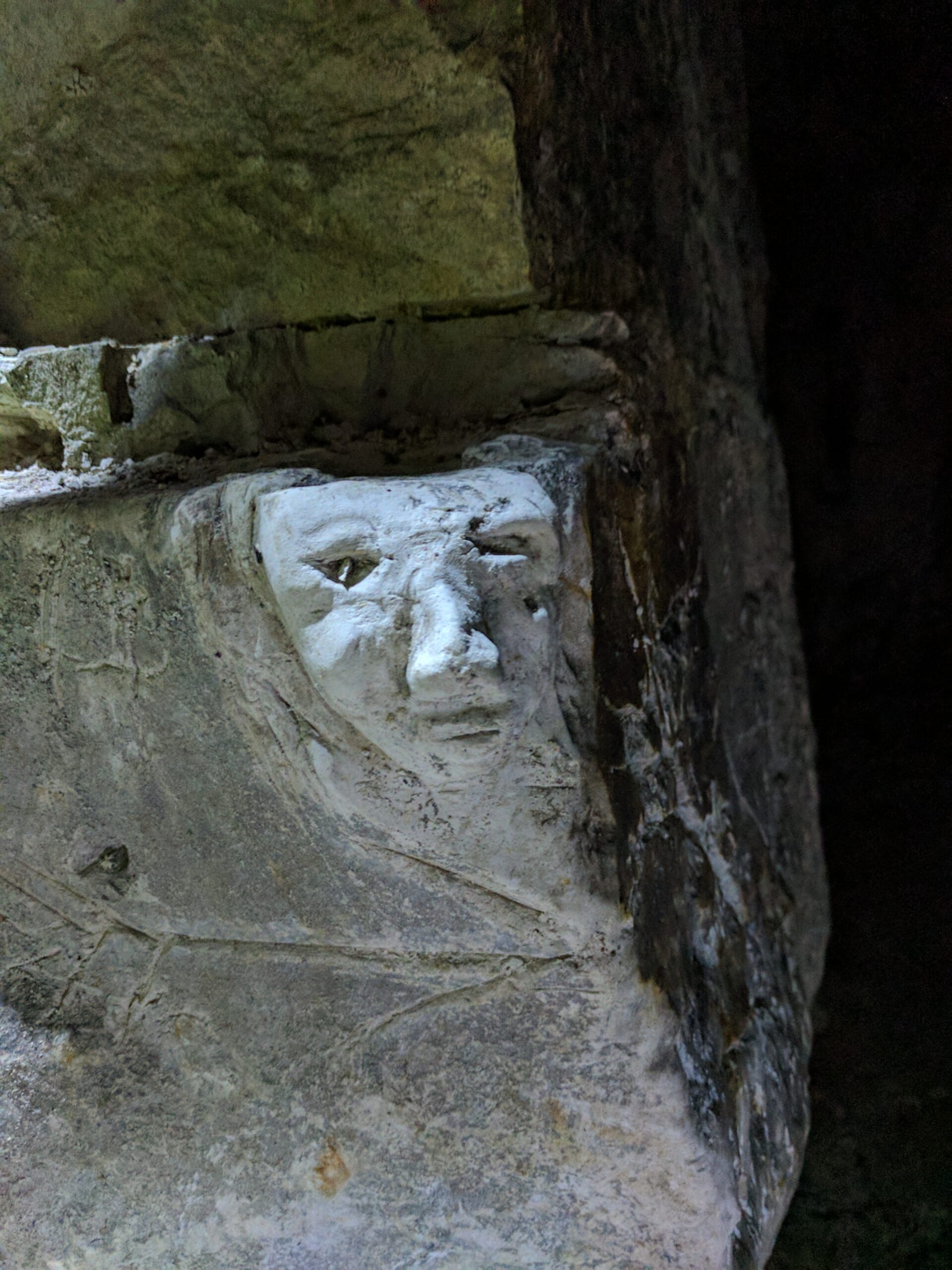
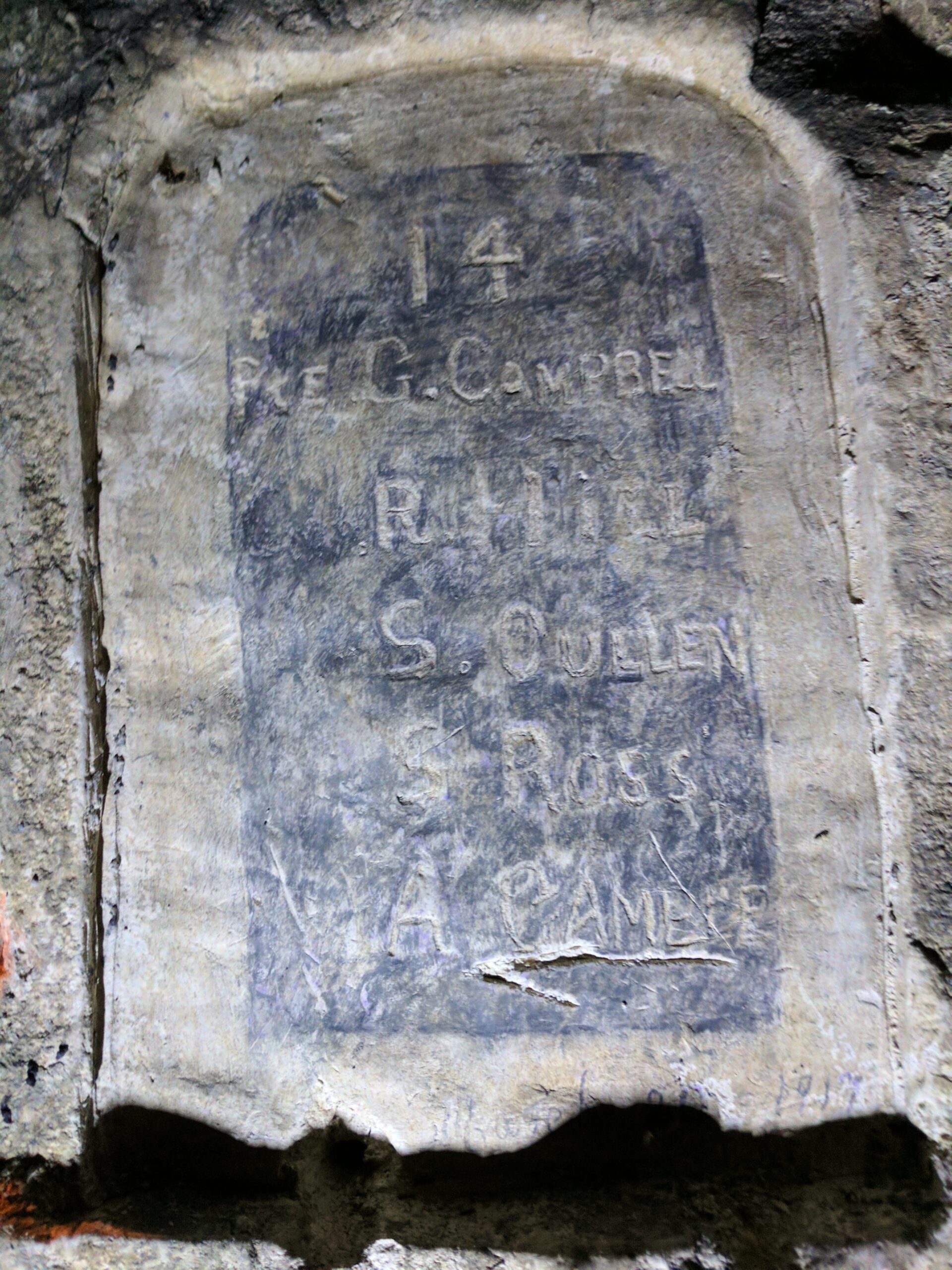
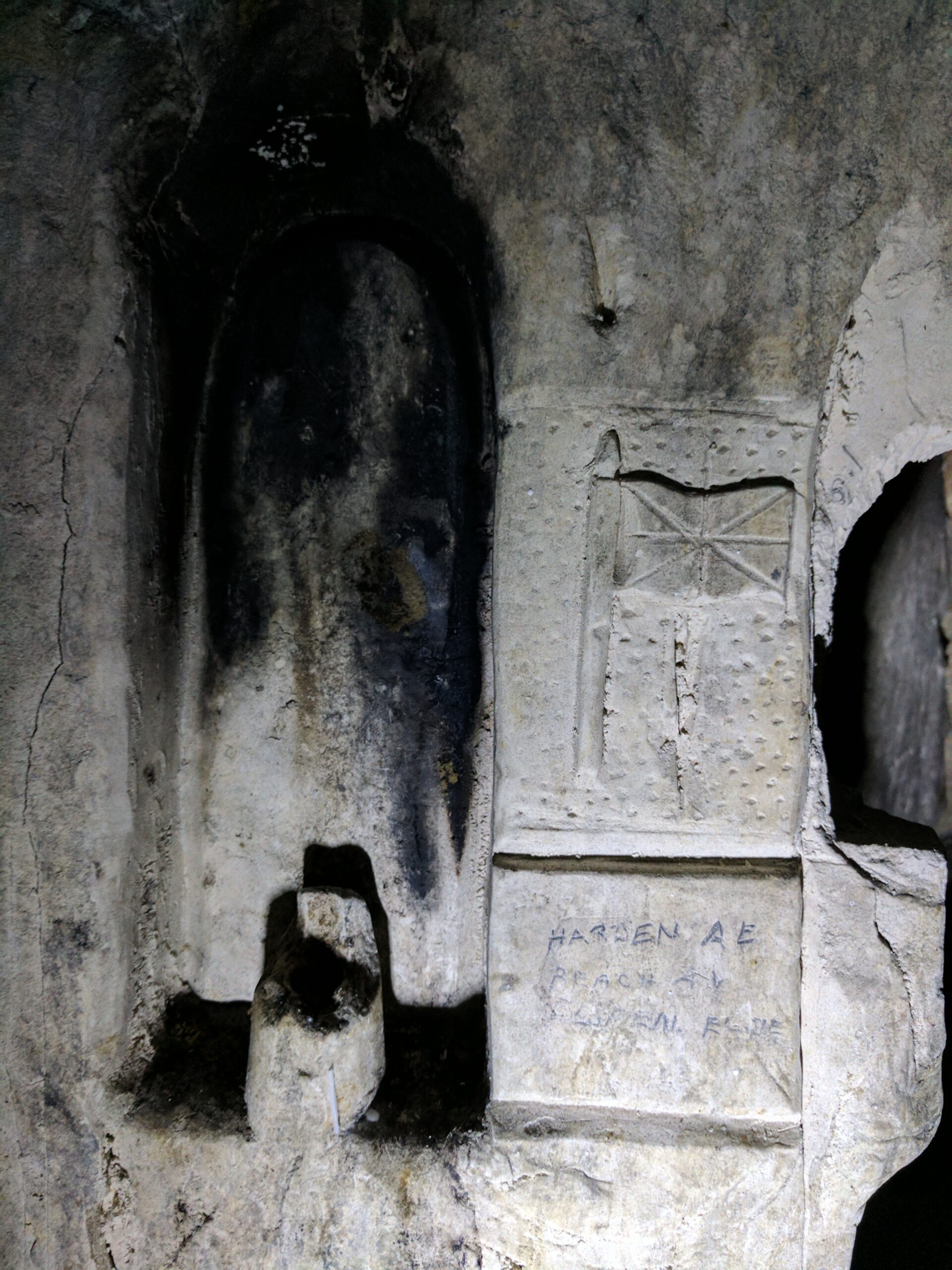
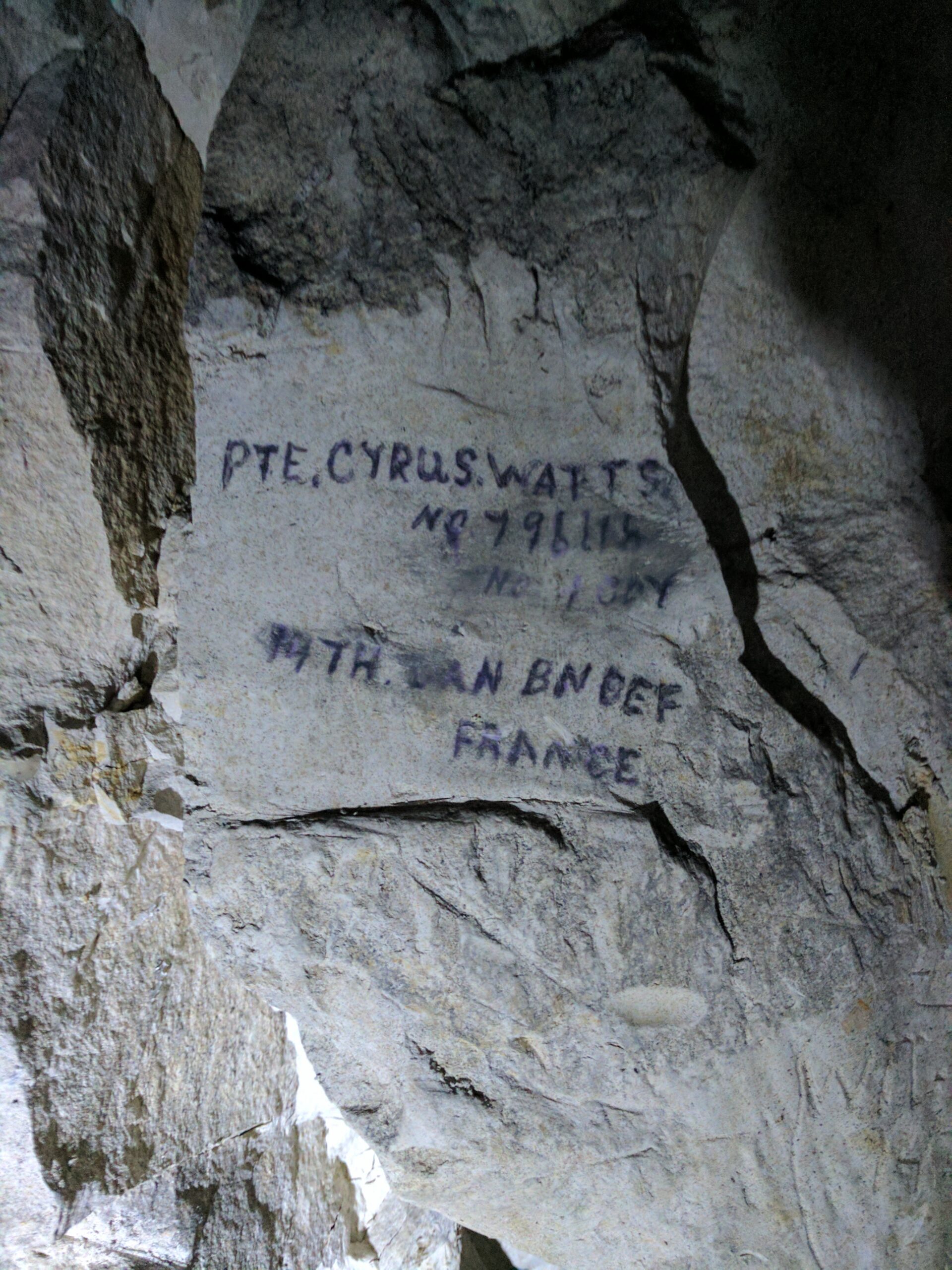
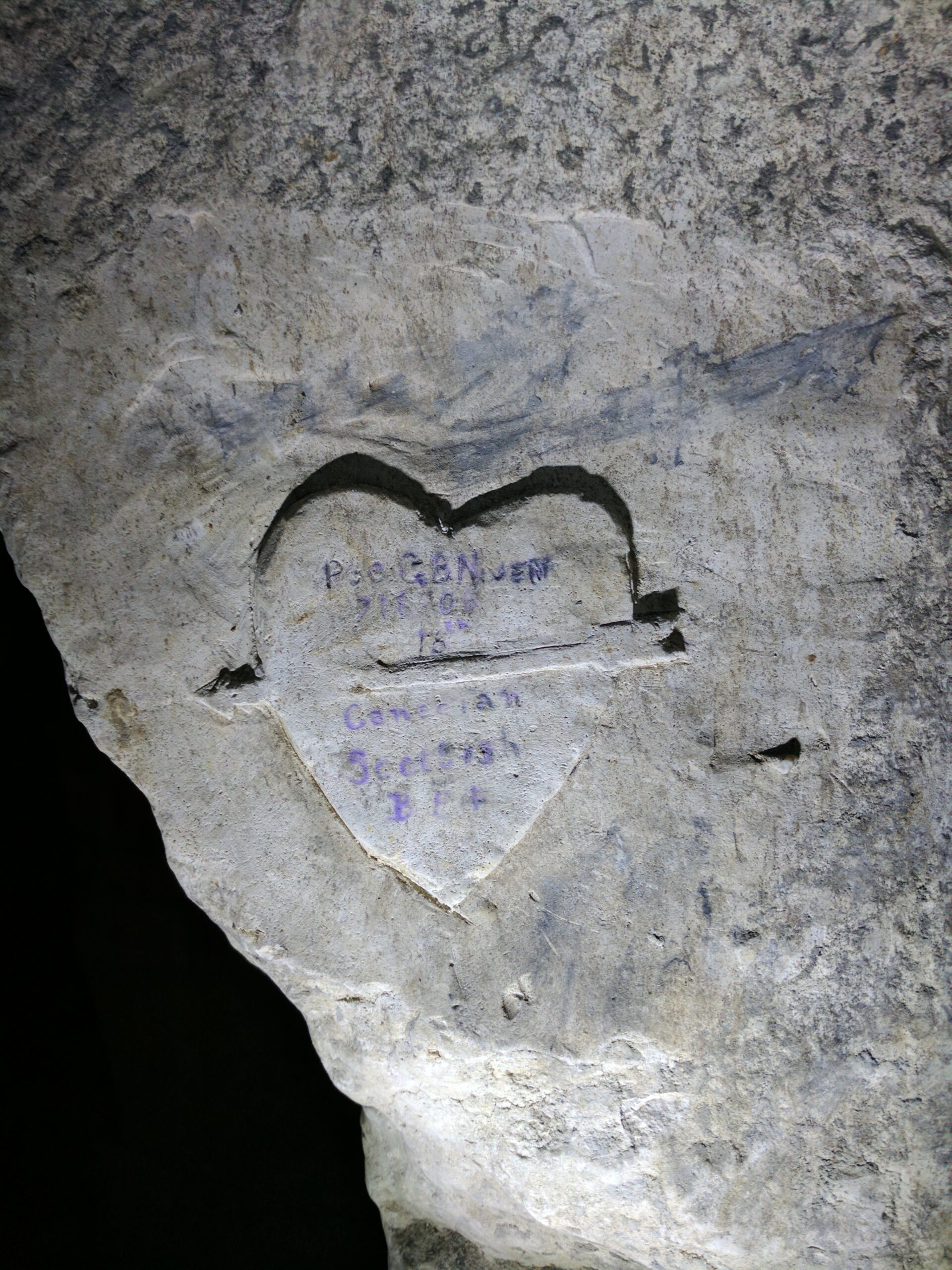
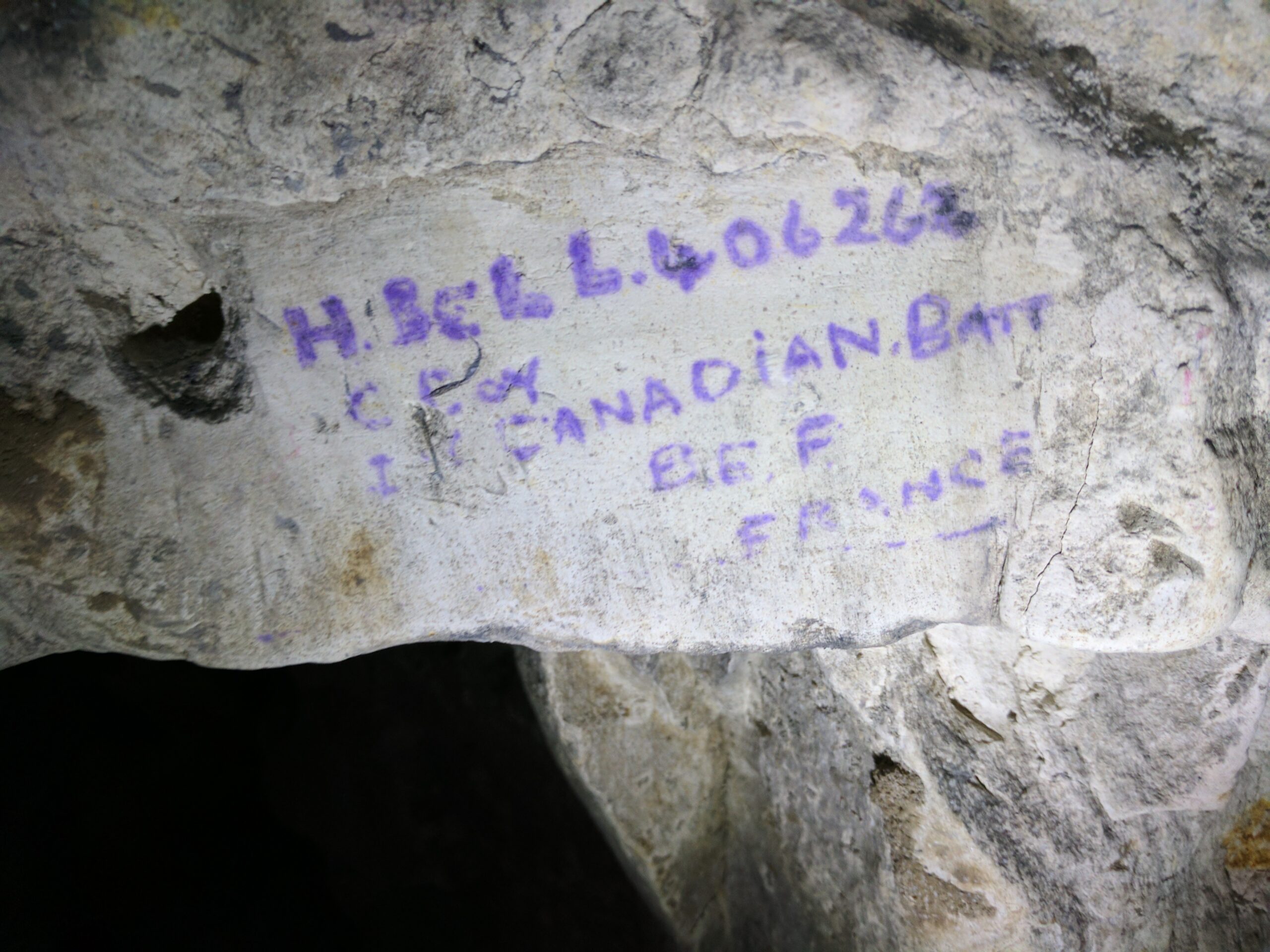
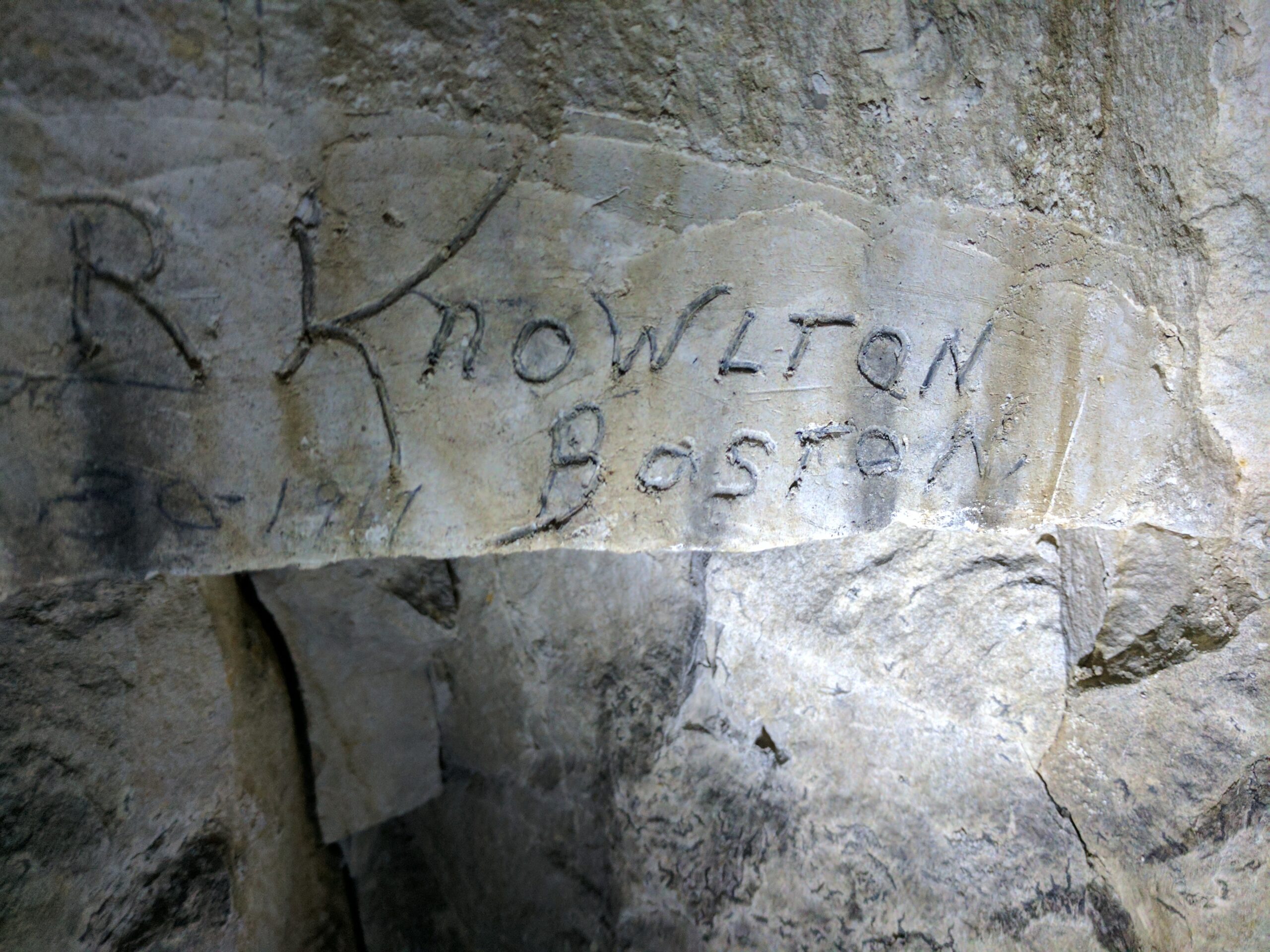
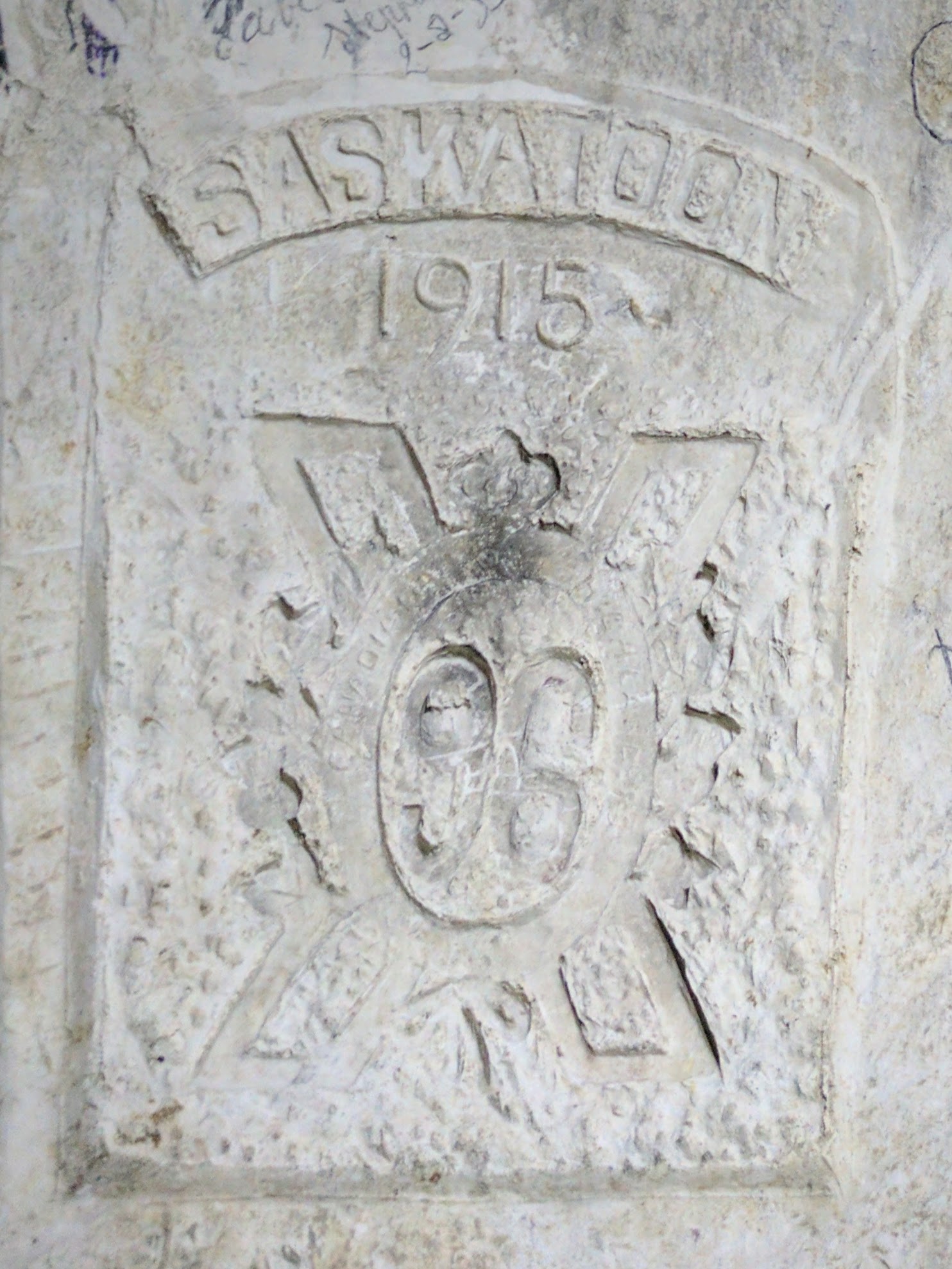
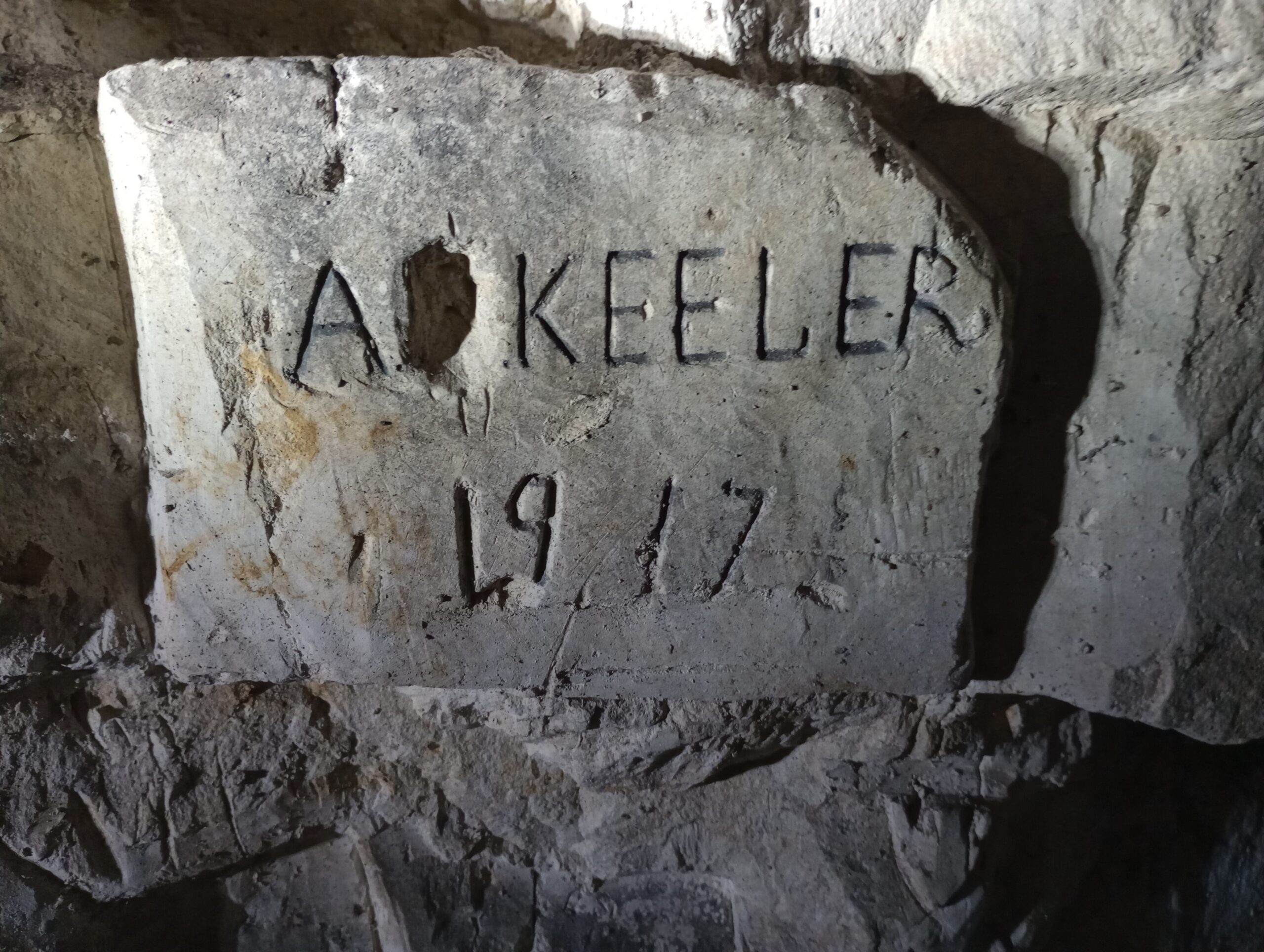
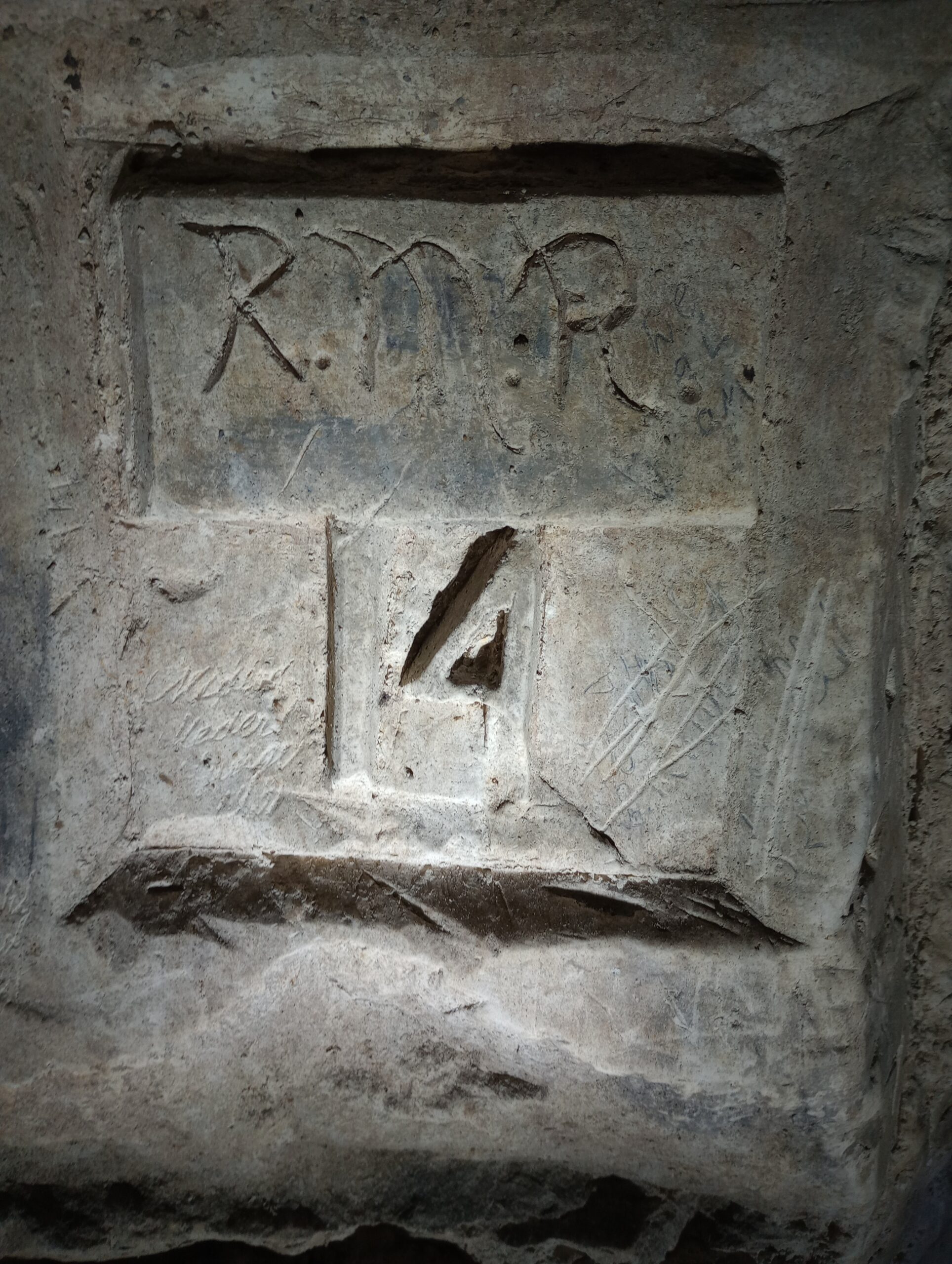
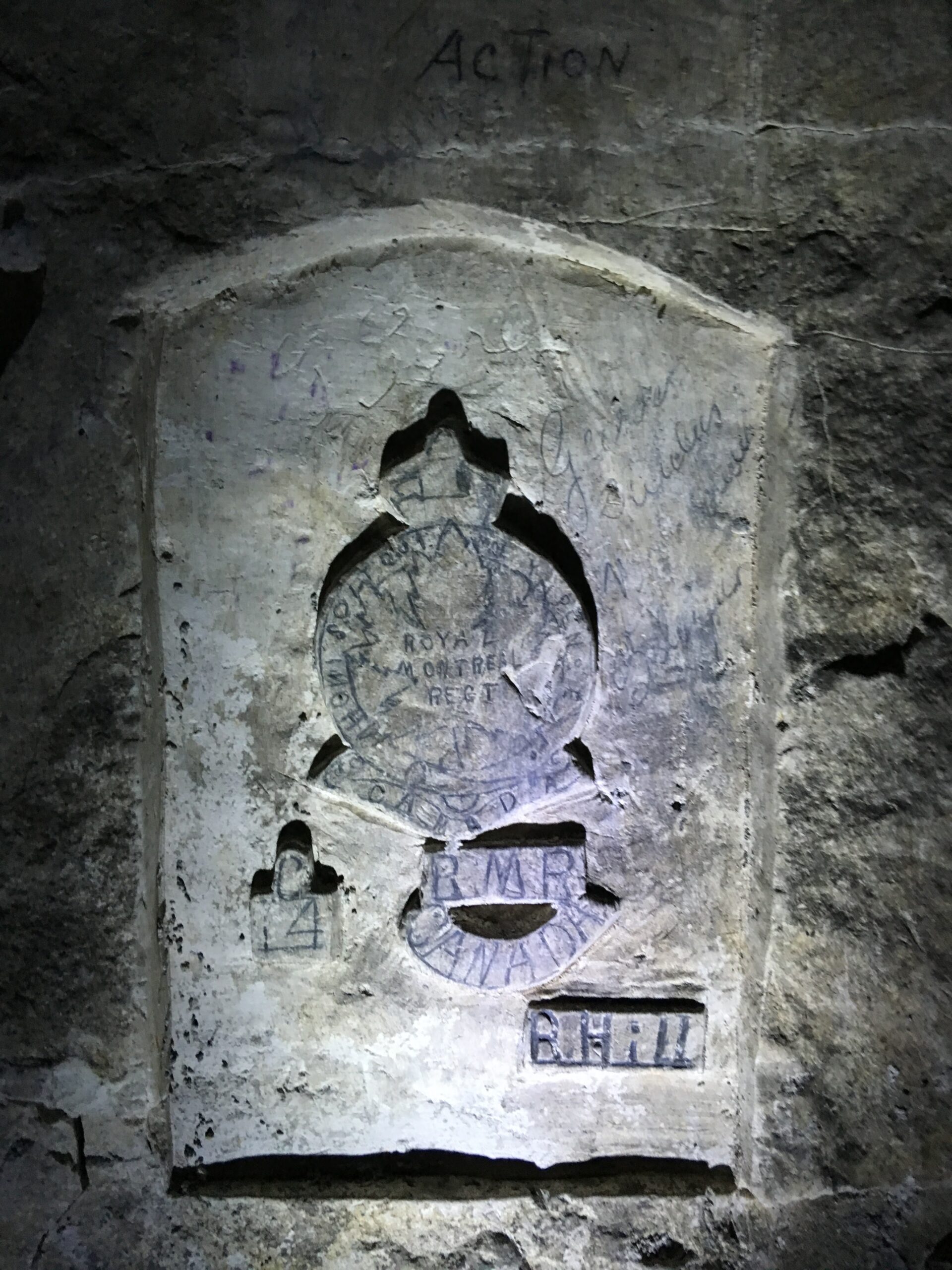
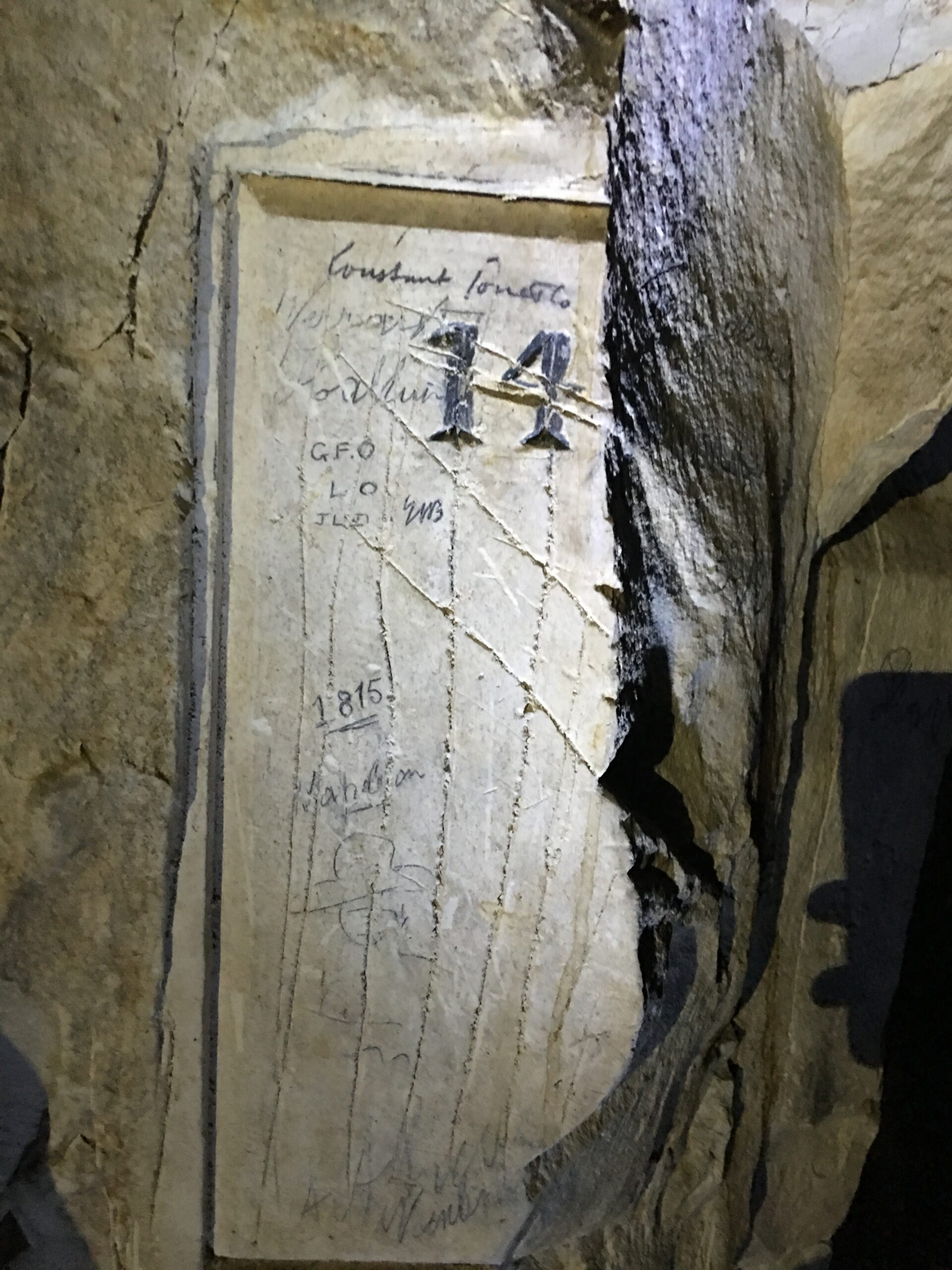
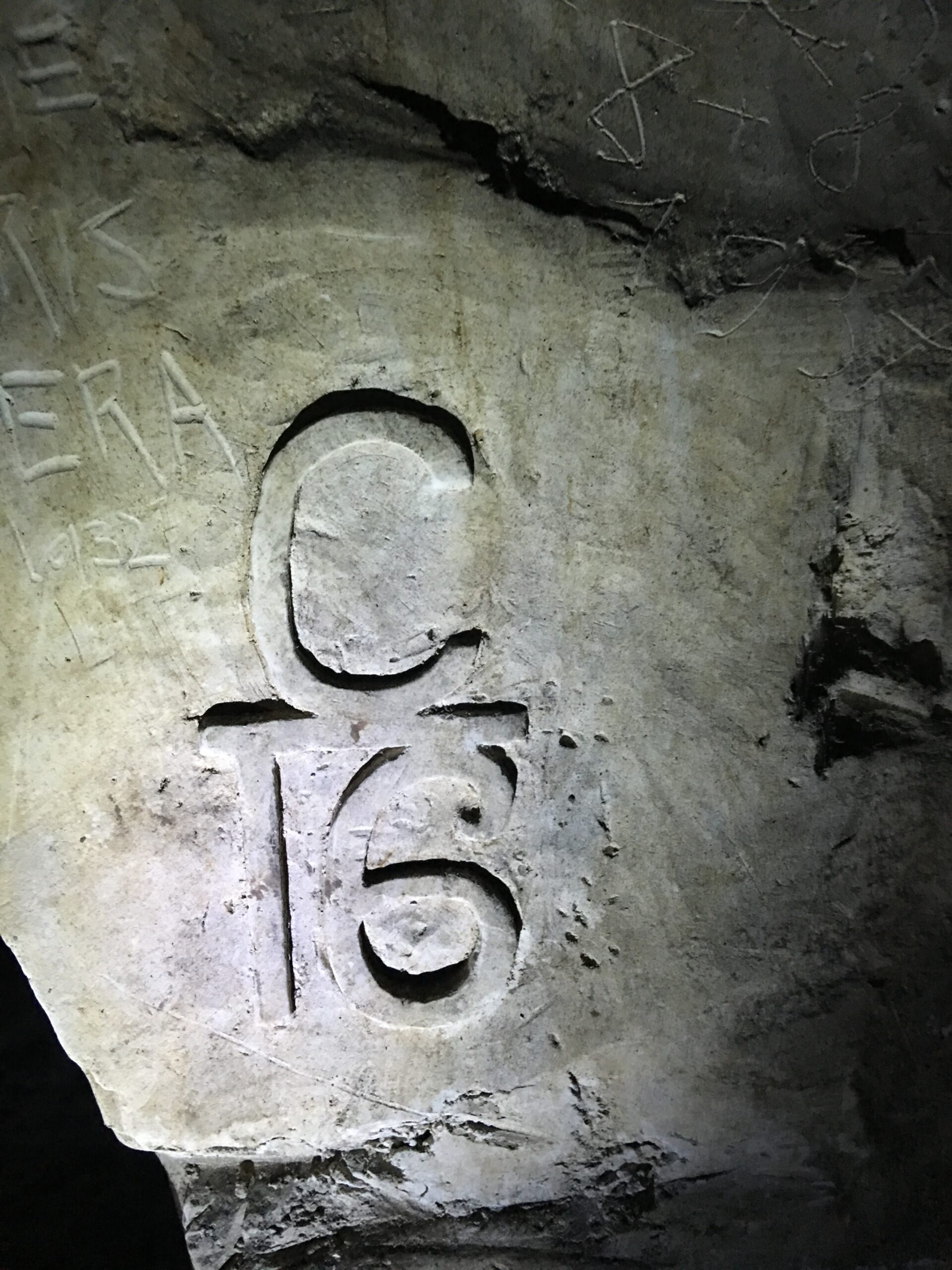
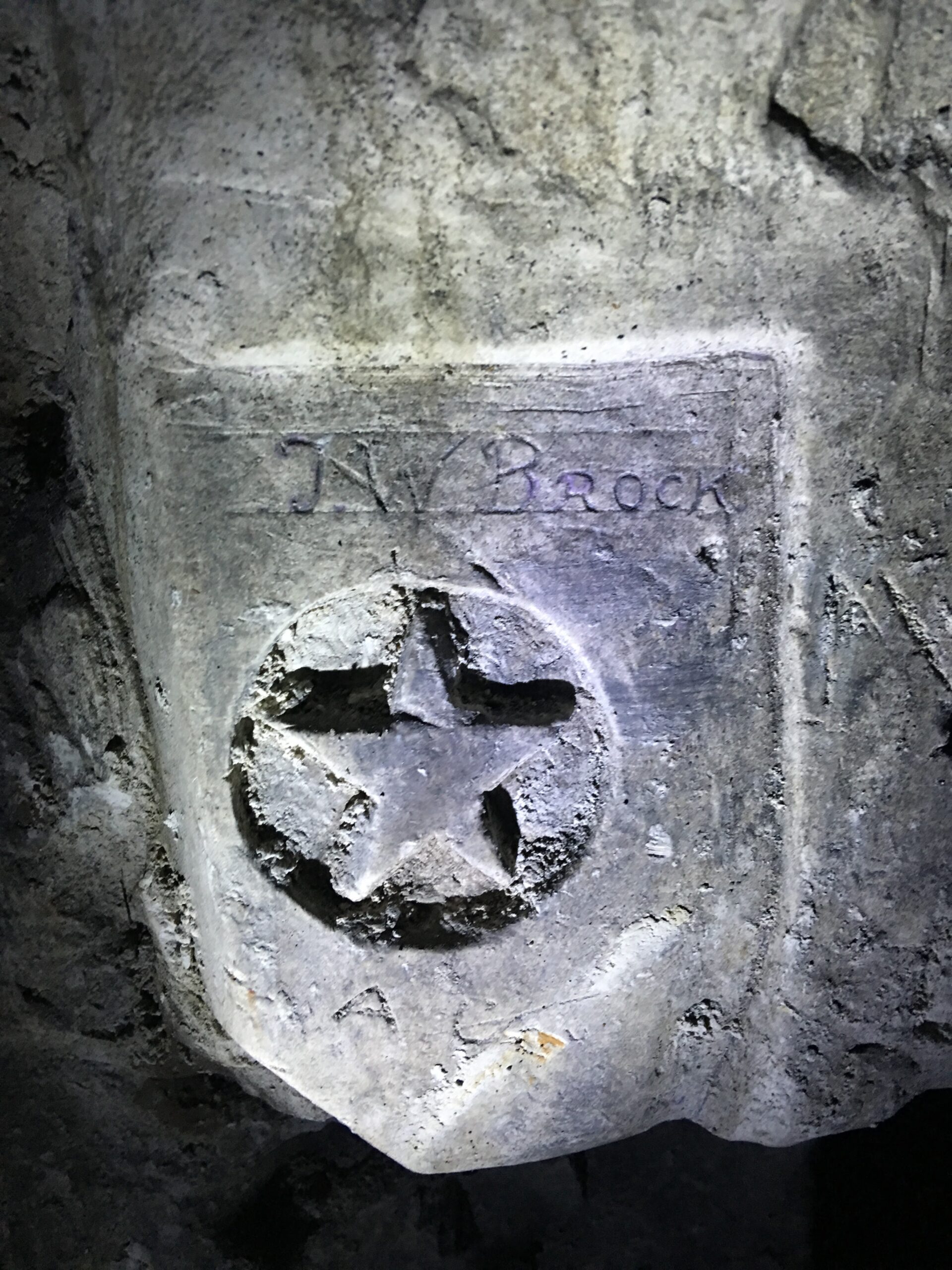
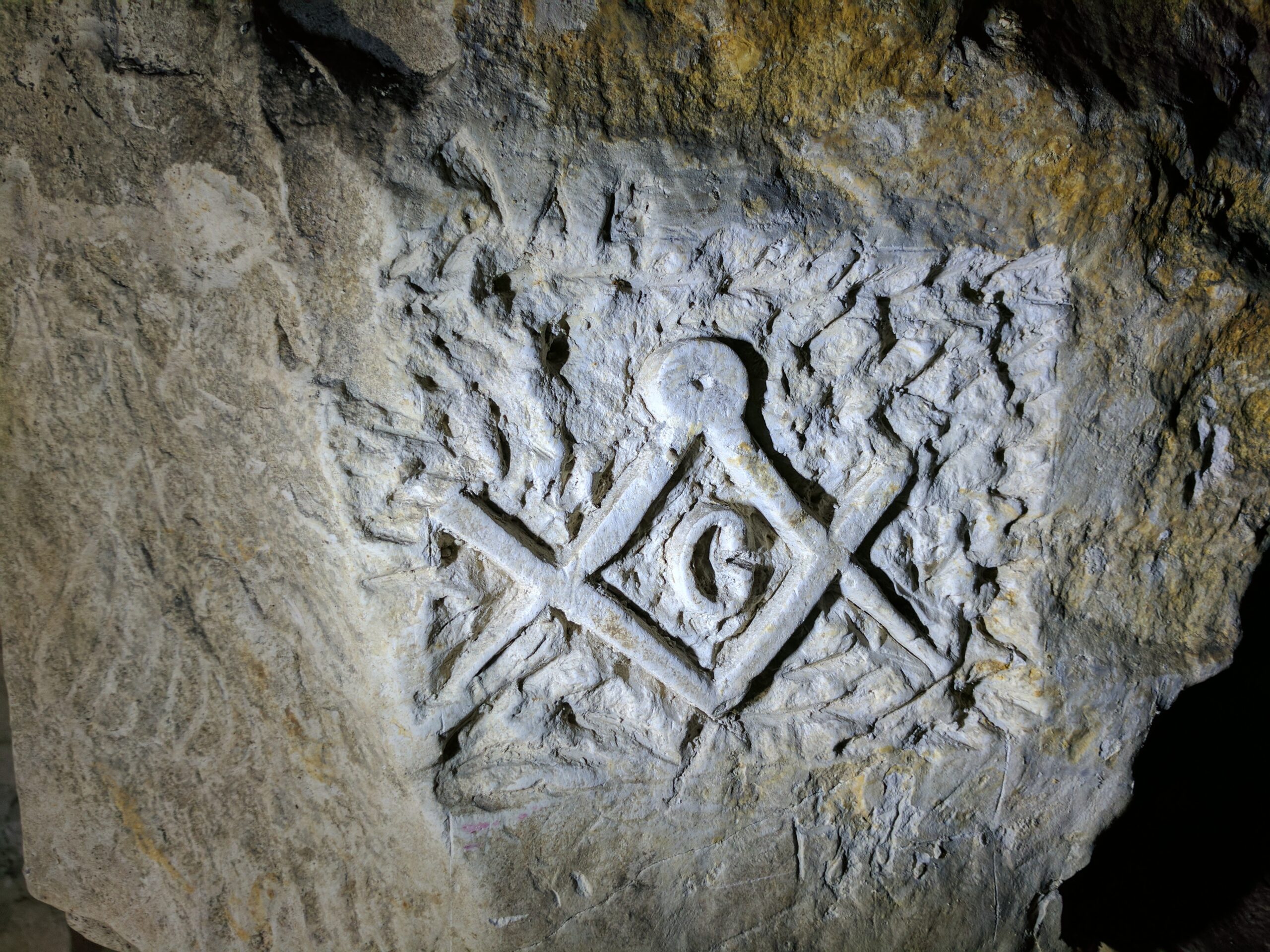
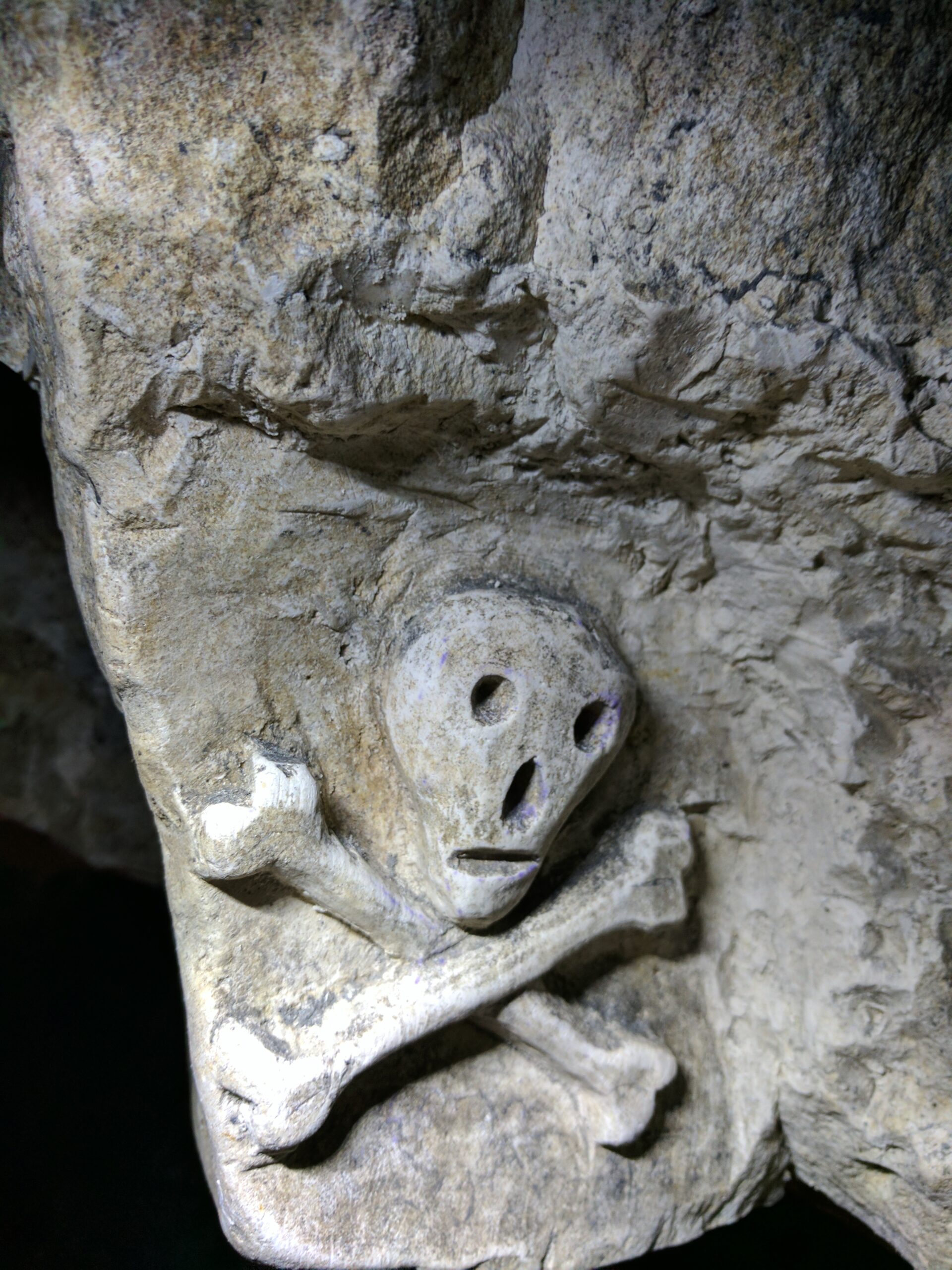
Up to a thousand inscriptions, drawings and carvings survive at Maison Blanche. Read together, they reveal more than the presence of particular soldiers. Names, dates and unit markings show who passed through the quarry, while repeated maple leaves, references to Canada, regimental emblems and images recalling home show how soldiers represented personal, military and national identities underground. Their locations within the chambers also provide evidence of how the quarry was occupied and personalized.
The Canadian inscriptions connect the souterraine to the people who served around Vimy Ridge, from infantry to those carrying out engineering and other work behind the front. The marks come from different periods and circumstances. Their location and relationship to neighbouring inscriptions help researchers distinguish military use, later visits and renewed wartime shelter.
Recording each mark in its setting allows researchers to compare it with neighbouring inscriptions, maps, wartime documents and later records. The resulting picture is broader than any single biography: it traces military service, Indigenous presence, later visits and the recurring search for shelter in wartime.
For visitors who want to follow the research further, Canadigm’s linked names index connects names recorded on the souterraine’s walls with Canadian service records. Some entries remain under research.
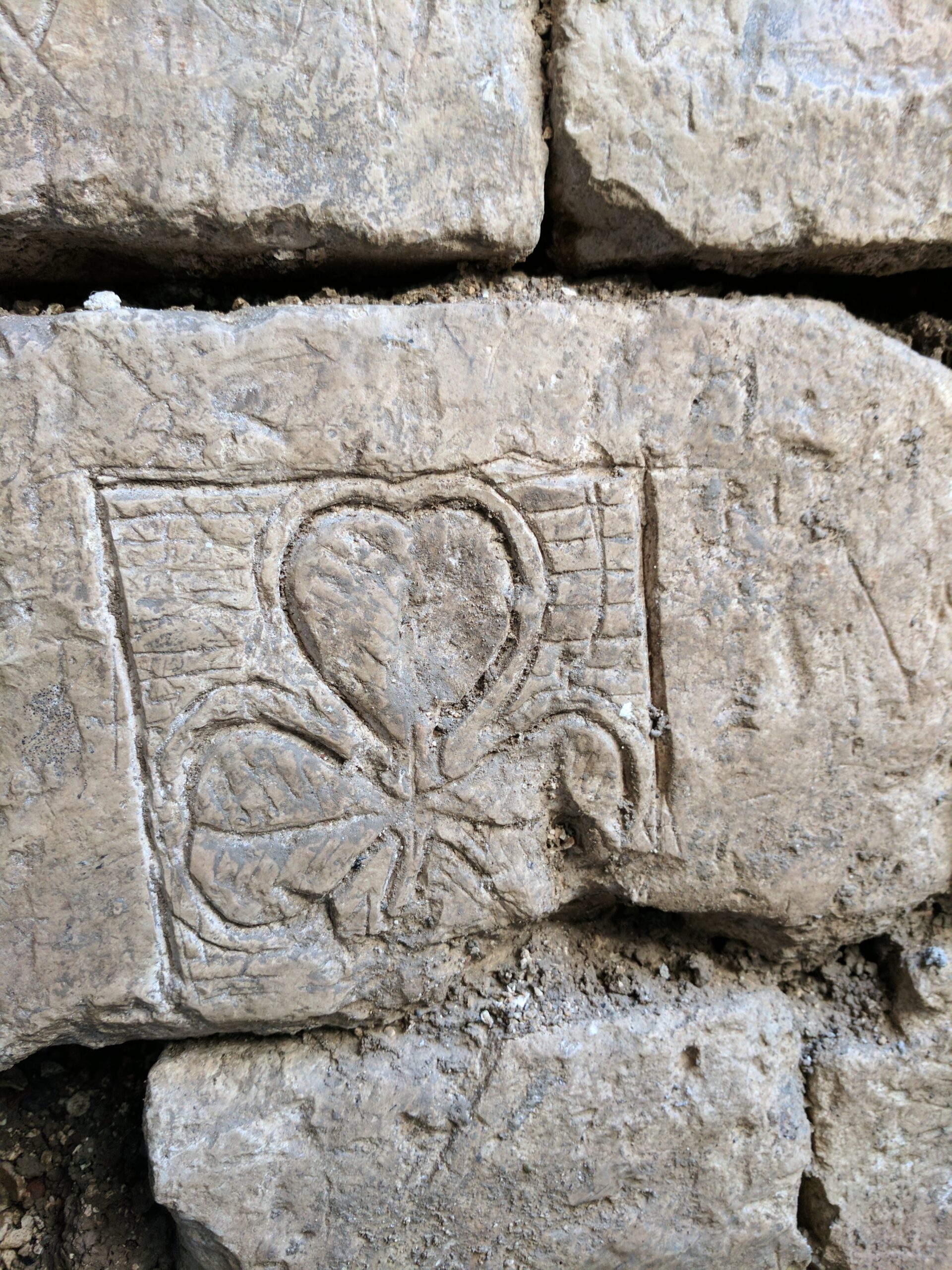
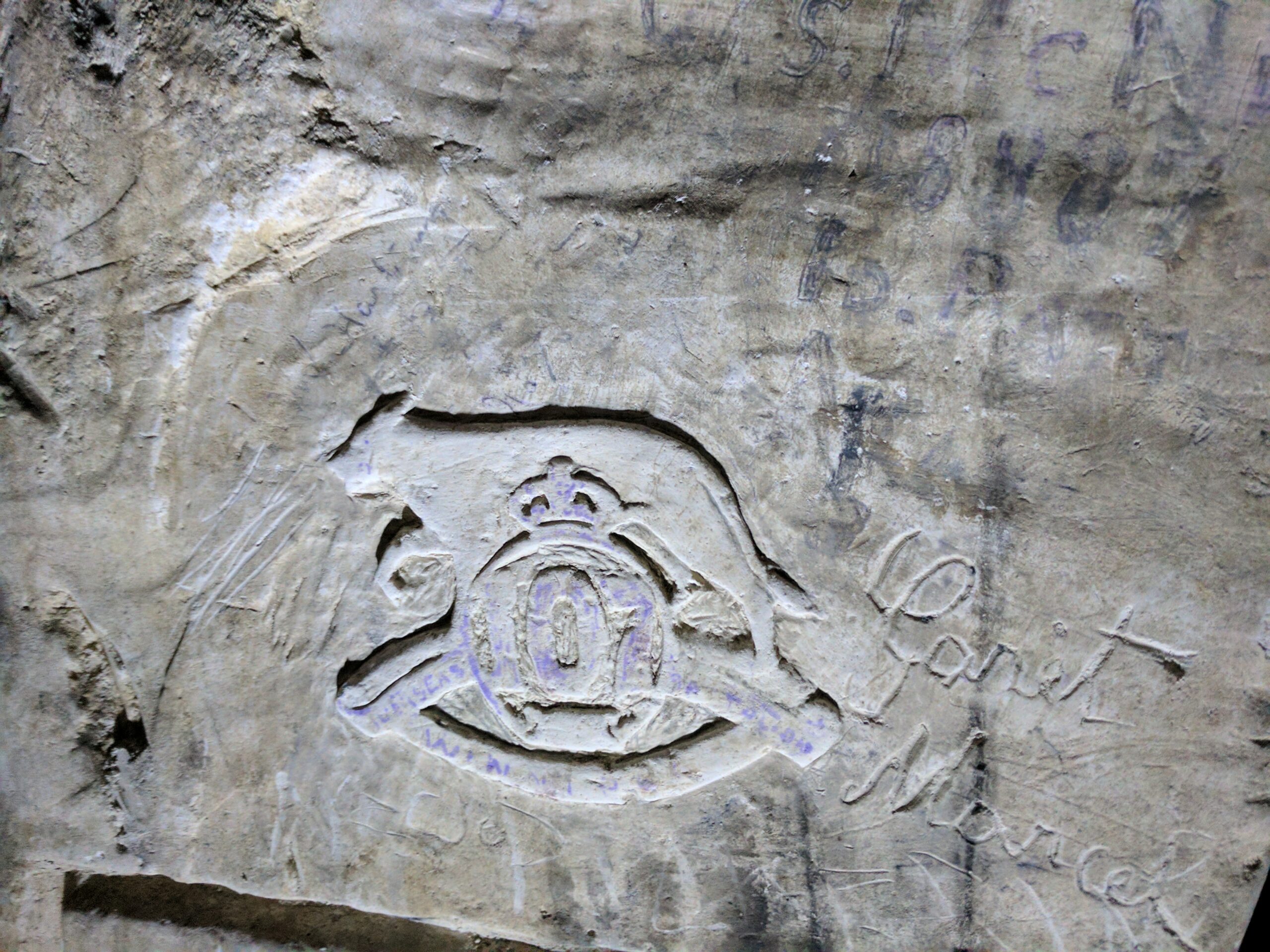
Indigenous Canadians at Maison Blanche
The record at Maison Blanche also reflects the service of Indigenous Canadians. At least four Indigenous soldiers have been associated with marks in the quarry, including men connected with the 107th Canadian Pioneer Battalion. This evidence is particularly valuable because the experiences of Indigenous servicemen have received less sustained historical attention than the larger narratives of Canadian units and battles.
A name or mark preserved where a soldier served provides a direct connection between an individual, his military service and his home community. Reading these inscriptions alongside service files and community histories can therefore contribute to a fuller account of Indigenous participation in the Canadian war effort, including the labour that supported the fighting at Vimy.
Recording and preserving Maison Blanche
Maison Blanche remained accessible to visitors between the wars and briefly provided shelter again during the German invasion of May 1940. From 1945, the quarry was used for farm dumping, gradually filling the former shaft and almost obstructing the brick-lined entrance. Dominique Faivre rediscovered its historical significance in 2001, and the Durand Group began improving access, lighting and recording the underground space in 2006.
The Group worked closely with Canadigm. During a joint period of work in 2011, the Durand Group’s graffiti recording team and Canadigm’s documentation team worked concurrently and shared site resources. Canadigm mapped wall sections and photographed inscriptions, and in 2012 made three-dimensional scans of selected carvings. The partnership brought together field access, historical research, photographic recording and digital methods to preserve evidence that cannot be replaced if the chalk deteriorates.
In December 2016, the Photogrammetry and Geomatics Group at INSA Strasbourg undertook a separate survey financed by the Pas-de-Calais Departmental Council. The team used 45 terrestrial laser scanning positions to record the wider souterraine, generating more than 1.4 billion points. Close-range photogrammetry documented 12 selected carvings, inscriptions and objects in greater detail. The work produced a textured three-dimensional model, maps, sections and a virtual-visit video. The team’s 2017 paper describes the survey and its results, while distinguishing this site-wide record from Canadigm’s earlier scans of individual carvings. Together, these records help researchers study Maison Blanche and allow people who cannot enter it to see what survives underground.
Recording remains an active process. Newer portable three-dimensional scanners can capture both the geometry and surface texture of the chalk, making faint pencil marks and lightly incised inscriptions more visible than they were to earlier equipment. Renewed examination and the clearance of debris continue to reveal marks that can be compared with service files, photographs and family histories.
Why the record matters
Maison Blanche is both a place and a record built up over time. Plans show how the chambers connect; photographs preserve details that can be hard to see under ordinary light; inscriptions and archival records help place the marks in their historical setting. Keeping these forms of evidence together makes the site useful to families, researchers and visitors seeking a fuller account of the Vimy period and its aftermath.
Maison Blanche is privately owned and is not open to the general public because of its condition and the risks inherent in the underground environment. Controlled visits have nevertheless allowed historians and some families to stand where their relatives sheltered and left their names. Water, erosion, earlier dumping, agricultural activity above the quarry and areas of relatively thin overburden threaten both the chalk and the marks it carries. Recording the quarry’s plan, inscriptions and their precise positions preserves relationships that may otherwise be lost.
The work continues as researchers read inscriptions alongside photographs, maps and service records. Each identification adds detail to the lives and journeys recorded on the walls.
Sources and further reading
- French 97th Infantry Regiment report and sketch, 18 February 1915
- Canon Frederick George Scott, The Great War as I Saw It (1922)
- Phillip Robinson and Nigel Cave, The Underground War: Vimy Ridge to Arras (2011)
- Matthew Leonard, Beneath the Killing Fields: Exploring the Subterranean Landscapes of the Western Front (2016)
- A. Murtiyoso, P. Grussenmeyer, S. Guillemin and G. Prilaux, “Centenary of the Battle of Vimy (France, 1917): Preserving the Memory of the Great War Through 3D Recording of the Maison Blanche Souterraine” (2017)
- Henry Williamson, The Wet Flanders Plain — firsthand account of the Maison Blanche caves
- Will R. Bird, Thirteen Years After — firsthand account of a visit to the Maison Blanche caves
- Kim Beattie, 48th Highlanders of Canada, 1891–1928 (1932)
- Veterans Affairs Canada: Battle of Vimy Ridge
- 15th Battalion Memorial Project: Maison Blanche souterrain
- Canadigm: linked names
- Arras Pays d’Artois: the Boves